

Pope Francis suggests countries should consider a universal basic wage to help combat the economic disruption caused by COVID-19.

Tesla has released a new video about the progress it is making in its effort to produce ventilators out of car parts. Hospitals around the world are finding themselves in need of ventilators to help save patients.

A new X-ray detector prototype is on the brink of revolutionizing medical imaging, with dramatic reduction in radiation exposure and the associated health risks, while also boosting resolution in other applications.
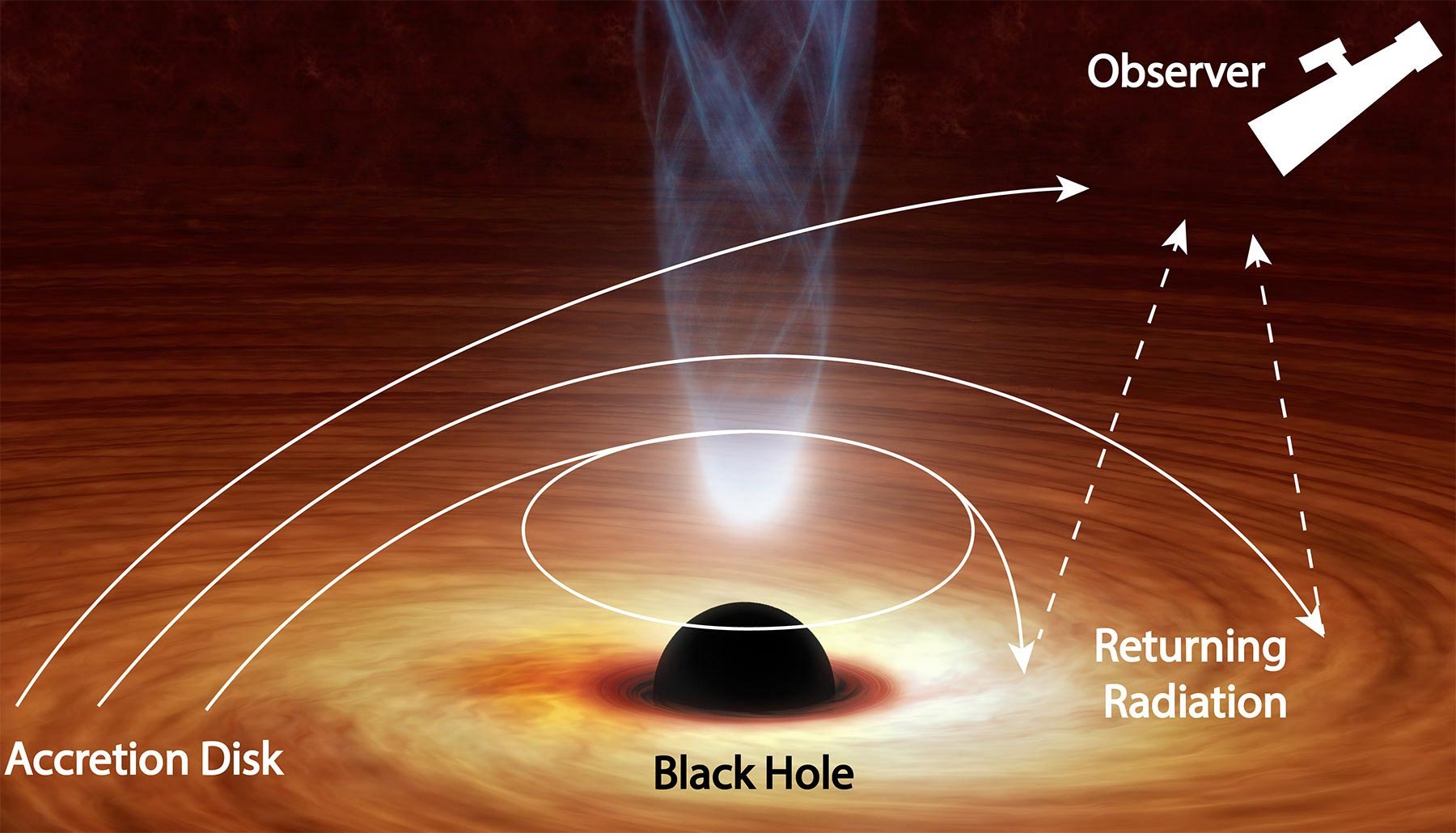
A new study offers evidence that, not all of the light streaming from a black hole’s surrounding disk easily escapes. Some of it gives in to the monstrous pull of the black hole, turns back, and then bounces off the disk and escapes.

Advises from people who know a lot about living in solitary, confined spaces - a monk, a submariner, a round-the-world solo sailor, an Antarctic researcher, and someone who lives on a remote island.

Major organizations have warned against children's use of hand-held devices in recent years. Tablets, phones, and computers do not cease to be harmful devices just because we have little else to distract us these days.

Will homes need to adapt to better accommodate work? Will pavements widen so we can keep our distance? Will we no longer want to live so densely packed together, working in open-plan offices ?

A new model suggests the Milky Way should have an additional 100 or so very faint satellite galaxies awaiting discovery.

One of the core assumptions of astronomy is that the universe appears the same in all directions, or it is isotropic. However, a recent study suggests that may not be the case.

When the Artemis III mission lands on the lunar surface in 2024 - it will serve as a stepping stone towards the creation of a permanent human presence on the Moon, NASA hopes.

Astronomers have spotted the brightest and most energetic supernova ever recorded. The event, known as SN2016aps, may have been the result of two stars merging and then exploding.

Idea of microbes originating from space. Microbes can survive frozen, deep within the permafrost for millions and even billions of years. They might be perfectly adapted for a life on some frozen object, traveling through space.

This brutal challenge to our existing systems may open new windows of opportunity for long-awaited change. Here’s a list of 16 positive changes to the collective mindset this era of emergency may bring.

An important advancement in human evolution studies has been achieved after scientists retrieved the oldest human genetic data set from an 800,000-year-old tooth belonging to the hominin species Homo antecessor.

Stratolaunch has revealed the designs of two hypersonic aircraft plus a reusable space plane that will be launched from its giant Carrier Aircraft launch plane. The company hopes to begin test flights of these vehicles by 2022.


