

Scientists are still preparing for the crucial fly-by of Earth by the joint European–Japanese BepiColombo mission to Mercury on 10 April, despite COVID-19 quarantine.

As the COVID-19 pandemic continues, scientists have predicted that global carbon dioxide emissions may drop by more than 5 percent in 2020—in what would be the largest fall since the end of the Second World War.

A team of scientists drilled into the ground near the South Pole to discover that 90 million years ago Antarctica was once home to a swampy rainforest and had average temperatures around +11C.

About 35 companies and academic institutions are racing to create Covid-19 vaccine.

It seems we're releasing anywhere around 10 to 30 nanograms of plastic fragments just a few nanometres across for every 3 metres (about 10 feet) of plastic we break apart.

Over half a mile in length, the avenue ‘Electric Avenue, W9’ in Westminster has been turned into an electric vehicle charging haven with lampposts acting as charging points.

In nearly three decades, Denman Glacier has already retreated some five km and lost over 250 billion tons of ice. In the worst case scenario, the damage could be much greater.

Scientists have found naturally occurring superconducting materials in extraterrestrial objects for the first time, discovering superconductive grains embedded inside two distinct meteorites that crash-landed on Earth.

Electric cars absolutely do produce less CO2 than gas guzzlers, a new study has confirmed - countering claims that carbon emissions from the manufacture of electric cars and the production of electricity outweighed the savings on the road.

Mercury, the closest planet to the Sun, is one of the last places we think about when considering the potential for life in the solar system. New research suggests the planet's interior once contained the basic ingredients for life.

Recent studies demonstrated that the relationship between brain structure and intelligence not only involves grey matter, but also white matter - the brain's wiring system.

For the first time, more 360 scientists from 184 different institutions have contributed to a global effort to find more than 200 regions of the genome and more than 300 specific genetic variations that affect the structure of the grey matter.

Geologists have discovered the first ancestor on the family tree that contains most animals today, including humans. The wormlike creature, Ikaria wariootia, is the earliest bilaterian.

By going over old data collected by the Voyager 2 spacecraft in 1986, two scientists at NASA’s Goddard Space Flight Center have made the startling discovery that Uranus’ atmosphere is gradually escaping into space.
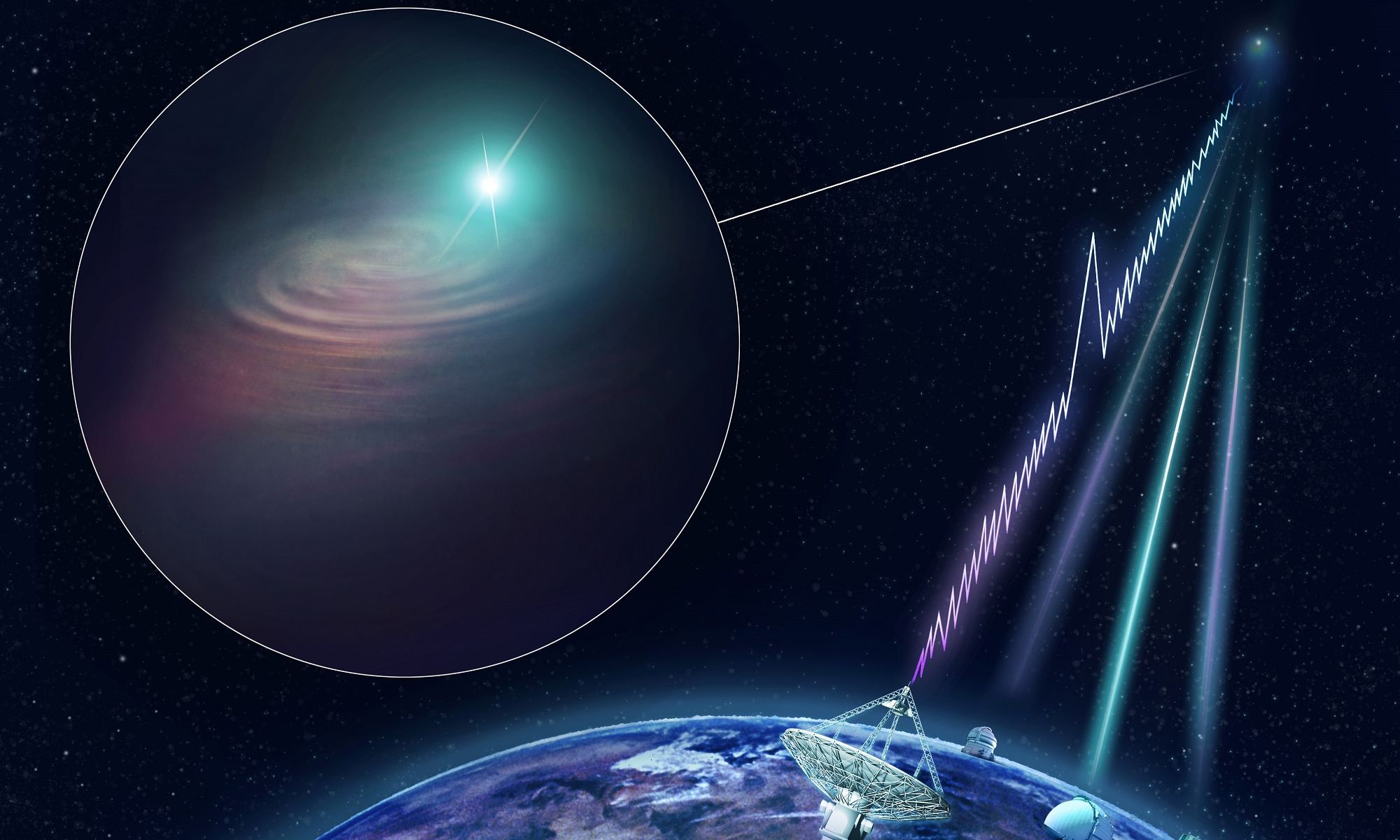
The CHIME radio telescope array has detected nine new fast radio bursts on repeat, which are revealing things about this strange phenomenon.


