

Since Pakistan locked down to try to stem the spread of COVID-19, unemployed day laborers have been given new jobs as "jungle workers", planting saplings as part of the country's 10 Billion Tree Tsunami programme.

The masks are made of the plastic polypropylene, which is not easily biodegradable. The accumulation of discarded face masks litters the environment and poses serious risks to the equilibrium of habitats and the health of wildlife.

Europe just gained its second and third coal-free countries. Sweden and Austria have both shut their last coal-fired plants in late April, joining Belgium in going coal-free in favor of renewable energy sources.

Giant elliptical galaxies are not as likely as disk-shaped galaxies, such as our own Milky Way, to be cradles of technological civilizations, according to a recent U.S. paper.

A Milky Way magnetar called SGR 1935+2154 may have just massively contributed to solving the mystery of powerful deep-space radio signals that have vexed astronomers for years.

Coronavirus is forcing people to reevaluate natural outdoor spaces for the first time in decades. Ideally, this pandemic experience will lead planners in urban areas to redesign for more natural green spaces.

Defined as the largest animals in the oceans, with a body mass that exceeds 45kg, examples include sharks, whales, seals and sea turtles - threatened marine megafauna, is facing extinction and we will face consequences.

The universe is full of billions of galaxies. Why do we see so much structure in the universe today? A 10-year survey of tens of thousands of galaxies has provided a new approach to answering this fundamental mystery.

NASA recently announced the three companies that will be building lunar landing systems to take astronauts back to the Moon - SpaceX, Blue Origin, and Dynetics.

4 billion year old Nitrogen containing organic molecules has been discovered in Martian meteorites. This finding suggests a wet and organic-rich early Mars, which could have been habitable and favorable for life to start.
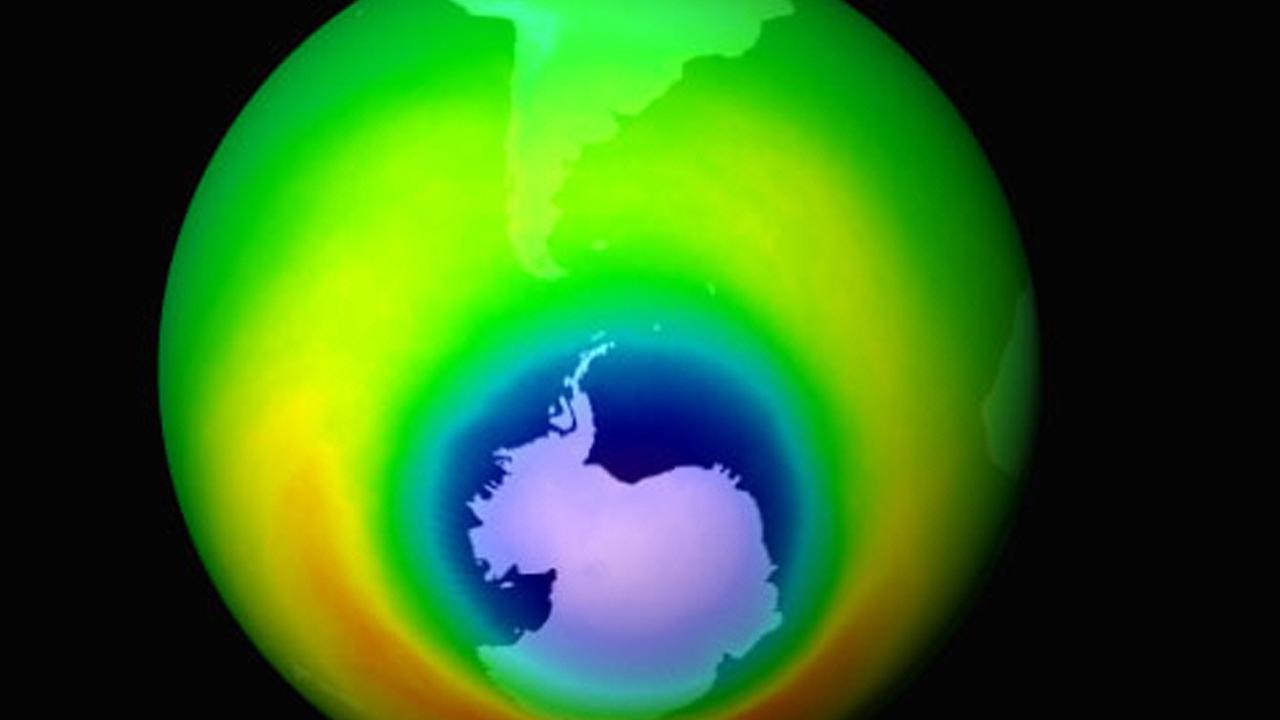
Earlier this year, most of the ozone around 18 km overhead had vanished completely. But now we can breathe a sigh of relief as its healed up again. However, it's hard to predict just how rising temperatures will affect it in future.

According to a recent study, up to 1.9 million pieces of microplastic is located in a 5 cm-thick layer covering just one square metre. It is the highest levels of microplastics yet recorded on the ocean floor.

100 million years ago, ferocious predators, including flying reptiles and crocodile-like hunters, made the Sahara the most dangerous place on Earth.

Many farmers around the world are having to destroy the crops they've worked hard to grow because wholesale markets have dried up completely. These horrific reports of waste raise the questions of distribution.

An average consumer throws away 60 % of clothing within a year of purchase. It is estimated that 18.6 million tonnes will be thrown away this year alone and by the year of 2050 the annual discard could grow to 150 million tonnes.


