

Researchers have discovered an interesting similarity in two of the largest recent earthquakes in Japan and Chile: a strange large-scale ground movement back and forth in the months leading up to the quake.
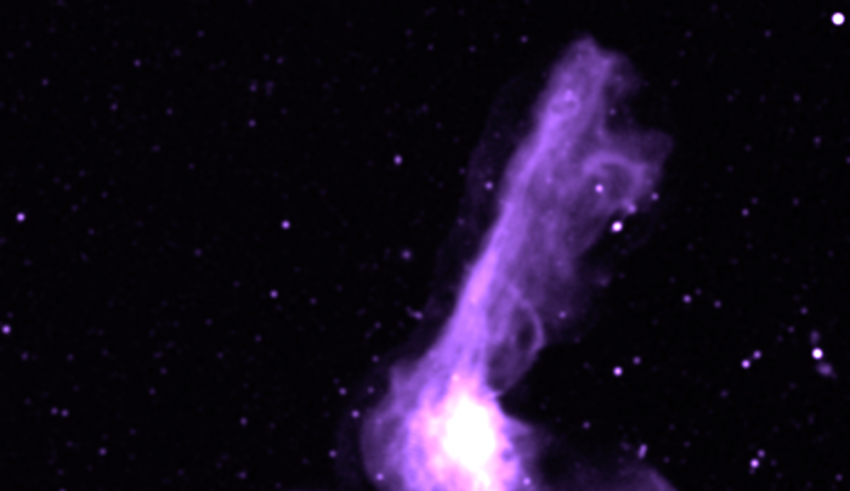
The prominent X-shape of PKS 2014-55 is made up of two pairs of giant lobes consisting of hot jets of electrons. These jets spurt outwards from a supermassive black hole at the galaxy's heart.

Scientists have developed a new type of self-assembling silver membrane that could be used to capture carbon dioxide (CO2) emissions before they have a chance to spread in the atmosphere.

The device works along the same principles as a normal radar, except instead of sending out radio waves to scan an area, it uses pairs of entangled photons.

China’s first in-orbit 3D printing test involved producing continuous carbon fiber reinforced polymer composites. This is the first time this has been done in space by anyone.

While the EU previously banned neonicotinoids — insecticides that target the central nervous system — in 2018, many other pesticides still pose a serious threat to Europe’s bee population.

Deforestation in the Brazilian Amazon hit a new high in the first four months of the year, according to data released Friday, a worrying trend after the devastation caused by record fires last year.

Virtual Market 4, or V-Ket 4 for short, is a Japanese expo that spans 36 separate worlds contained within the VRChat ecosystem. To date, VRChat is by far the most popular and used social VR application.

Engineering a version of photosynthesis that might be useful for fuel production is challenging. Now, german researchers have rearranged some photosynthetic proteins to make bacteria emit hydrogen when exposed to light.

the researchers conclude that the logging of native forest increases the risk and severity of fire. And in the case of the devastating 2019-20 fire season, logging likely had a profound effect.

A pilot project at Keele University is pumping out a mix of 80 percent natural gas and 20 percent hydrogen made by electrolysis in a shipping container sized unit.

The Hubble Space Telescope has captured two images showing Atlas, originally up to 180 metres across, has broken into as many as 30 pieces, each about the size of a house.

Astronomers studying what they thought was a double star system 1,000 light years from Earth in the southern constellation Telescopium stumbled on what must be a stellar mass black hole.

Astronomy is advancing to the point where we can see planets forming around young stars. This was an unthinkable only a few years ago. It was only two years ago that astronomers captured the first image of a newly-forming planet.

The surface of Jupiter's moon Europa features a widely varied landscape, including ridges, bands, small rounded domes and disrupted spaces that geologists call "chaos terrain."


