

A gravitational wave detected in May of last year has given us a type of cosmic collision we've never seen before.

NASA is about to launch a new solar sail design with a better support structure. Called the Advanced Composite Solar Sail System (ACS3).

Researchers using CSIRO’s Parkes radio telescope, have detected unusual radio pulses from a previously dormant star with a powerful magnetic field.

The thick once again plottens in the quest to narrow down the expansion rate of the Universe.

Scientists seem to have figured out why the Moon is made up of such weird and heavy rocks - way back in the day, it turned itself inside out.

The Great Filter is a hypothesized event or situation that prevents intelligent life from becoming interplanetary and interstellar and even leads to its demise. Artificial Super Intelligence could be the Great Filter.
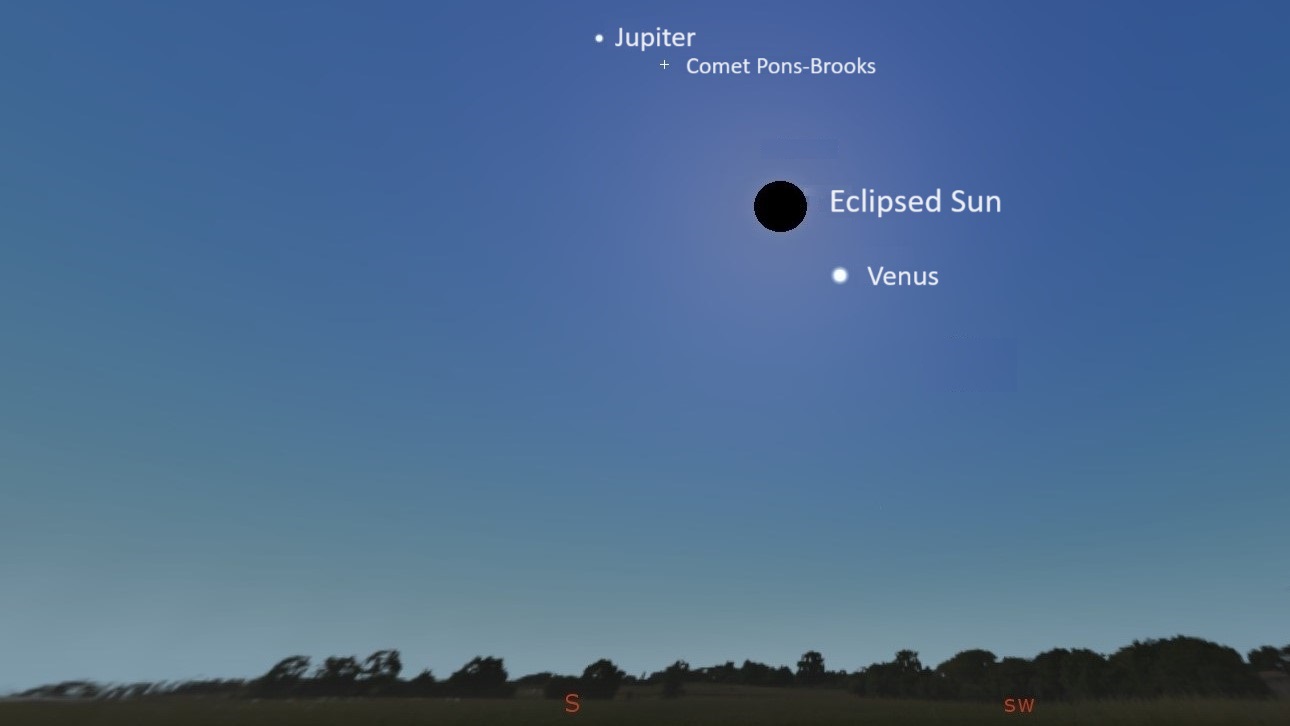
Comet Pons-Brooks visits the inner solar system every 71 years. Its next perihelion (when it’s closest to the sun) will be on April 21, 2024.

A world infamous for its hellacious conditions may have just been seen spotting one of the prettiest phenomena ever to grace Earth's own atmosphere.

The White House in U.S. has recently directed NASA to establish a unified standard of time for the moon and other celestial bodies.

Combining results of laboratory studies on the infra-red glow of carbon molecules in simulation software has led a team of researchers to a new discovery about the creation of spherical carbon 'cages' called fullerenes.

Data from the Gaia Space Telescope was used to identify quasars, the intensely bright young galaxies fueled by black holes.

The observatory has achieved this milestone over 28 years in space, even though it was never designed to be a comet hunter.

The differential rotation seems to be reined in by long-period oscillations of sound waves in the convection zone that can be detected on the surface as swirling motions around the poles.

A total solar eclipse takes place on April 8 across North America.

A new image from the Event Horizon Telescope (EHT) collaboration has uncovered strong and organised magnetic fields spiraling from the edge of the supermassive black hole Sagittarius A* (Sgr A*).


