
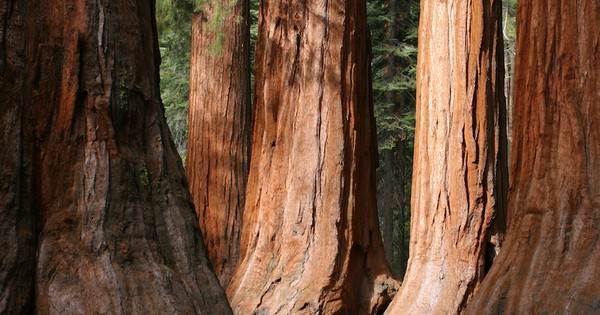
Yosemite National Park's largest sequoia grove in the USA reopened to the public last Friday after crews completed a $40 million restoration project to protect the nearly 500 ancient trees.

While there is no physical evidence that parallel universes exist, the theories that explain how our universe came to be seem to suggest that they are inevitable.

Waymo has been testing self-driving cars with 400 riders in Phoenix, USA for a year. The company is expected to launch a paid self-driving car service to the public in Phoenix before the end of the year.

US Scientists have developed a device for automated blood drawing and testing that could provide rapid test results at bedsides or in ambulances, emergency rooms, clinics or doctors’ offices.
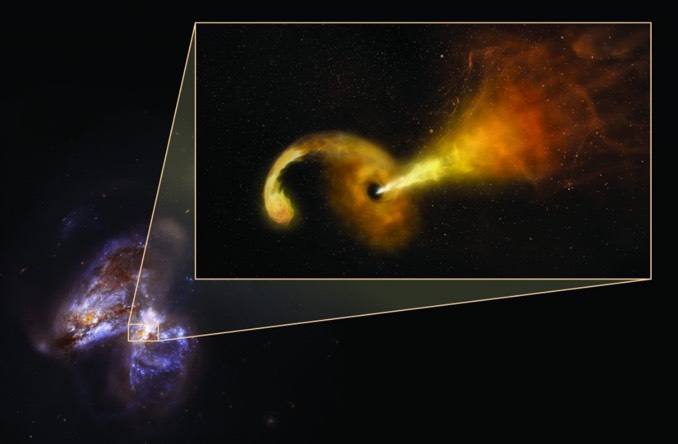
For the first time, astronomers have directly witnessed the aftermath of a black hole consuming a nearby star, imaging the formation and expansion of a high-speed jet of material ejected in the maelstrom.

Researchers have identified 121 giant planets that potentially host moons capable of supporting life.

The deaths of the majority of the oldest and largest African baobabs over the past 12 years is an event of an unprecedented magnitude.

A new study Futurology: The new home in 2050 provides insights into some of the trends we are likely to see 30 years or more into the future.

Two independent teams of astronomers have used ALMA to uncover convincing evidence that three young planets are in orbit around the infant star HD 163296.

We’re still a few years away from the final document, but serious proposals are in the planning stages for next generation space telescopes - HabEx, Lynx, Origins Space Telescope and LUVOIR.

Large Hadron Collider general-purpose detectors ATLAS and CMS have made complimenting discoveries on the Higgs boson and top quark coupling process.

One of the thickest dust storms ever seen on Mars has been spreading since early June. The Opportunity rover - 1 of 2 active rovers on Mars - has suspended science operations.

The relaxation response and mindfulness meditation are working through different neural mechanisms.

The findings from a major international climate assessment show Ice losses from Antarctica have increased global sea levels by 7.6 mm since 1992, with two fifths of this rise (3.0 mm) coming in the last five years alone.
A new analysis of data from NASA's Dawn mission suggests that organic matter may exist in surprisingly high concentrations on the dwarf planet's surface.


