

Some diapers can take up to 400 years to decompose. Now researchers in Taiwan have created a user-friendly machine that can turn 220 pounds of dirty diapers into clean, raw materials in a single hour.

Researchers may have found the reason for the rise in levels of CFCs in the atmosphere: factories in China that produce foam for refrigerators and buildings.

Once arid hillsides have now become lush green woodland in northwestern Pakistan, where hundreds of millions of trees from 42 different species have been planted as part of the “Billion Tree Tsunami” program.

Nexus for Exoplanet Systems Science, or NExSS project's mission is to be able detect extraterrestrial “biosignatures” using current and future technologies.
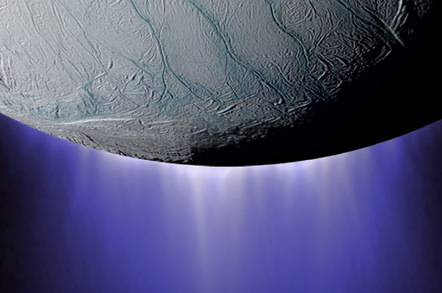
Using mass spectrometry data from NASA's Cassini spacecraft, scientists found that large, carbon-rich organic molecules are ejected from cracks in the icy surface of Saturn's moon Enceladus.

The James Webb Space Telescope would be the most complex imaging hardware that NASA has attempted to put into space. But so far, that complexity has driven extensive delays.

Some 50 years since the 'marshmallow test' in which most kids gobbled up one treat immediately rather than wait several minutes to get two, today's youngsters may be able to delay gratification significantly longer.

South Korean researchers used carbon nanotubes and AI to create an ultra-thin portable keyboard that can be crumpled up like paper without breaking it.

However, eager spacegoers may want to reconsider rushing to fly. So far, Blue Origin has only flown its New Shepard vehicles eight times with its first launch in April 2015 proving testy.

Not many people have heard of Fairphone, a Netherlands-based smartphone start-up. Unlike the leading brands, Fairphone is committed to ethically manufactured smartphones.

A creation is an underwater device that uses light to detect harmful pollution in the ocean and it does so without harming living organisms.

Millennials are far more concerned about chemicals in the products they buy than their parents ever were. To them fabric softener is a big no-no, full of chemicals that coat fabrics with a light layer of lubrication.

A storm of tiny dust particles on Mars has prompted NASA's Opportunity rover to suspend science operations. The Martian dust storm has grown in size and is now officially a 'planet-encircling' (or 'global') dust event.

Scientists have analyzed data from K2, the follow-up mission to NASA's Kepler Space Telescope, and have discovered a trove of possible exoplanets amid some 50,000 stars.

The environmental audit committee in UK will investigate the social and environment impact of this type of short-lived clothing and the wider industry.


