
China's news agency has created artificial intelligence news presenters - modeled off other, real news anchors.

Antarctica was once part of the supercontinent Gondwana, which began to disintegrate some 130 million years ago, although the bond between Antarctica and Australia held together as recently as 55 million years ago.

Climate change, Los Angeles fire chief Daryl Osby said, was undeniably a part of why the fires burning in northern and southern California, US, were more devastating and destructive than in years past.

If it seems like everyone you know is trying yoga or meditation, you might be right. A new US government survey shows that the number of people practicing the "mindfulness" techniques has surged in the past few years.

Hate crimes in large cities have increased since 2014, but schools offer a place where students can gain a better understanding of people in other lands and cultures and learn to empathize with them.

Swedish electric car company Uniti is developing an all-new electric two-seater Uniti One, which will be first produced at a “pilot production plant” by 2020.
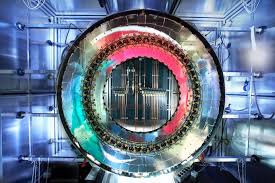
The new and unknown particle is just over a fifth of the mass of the Higgs boson. There's nothing in any of the current models that predicts this mass. However, It's unlikely to be physics-breaking.

Finland has set a goal to make the country a global circular economy leader by 2025, by adopting the world’s first road map to a circular economy in 2016.

In the past five years, the amount of renewable capacity has tripled while fossil fuels’ has fallen by one-third, as power stations reached the end of their life or became uneconomic.

More precisely, the Milky Way collided with the second galaxy, absorbing many of its stars and spiraling out a chaotic tangle of stellar matter — birthing new stars and altering the orbits of others.

Since 2016, SpiNNaker has been simulating neuron activity using 500,000 core processors, but the upgraded machine has twice that capacity. Now it has the capacity to perform 200 quadrillion actions simultaneously.

Cochin International Airport is the world’s first solar power airport and received The United Nation’s 2018 Champions of the Earth Award for Entrepreneurial Vision.

Starting in January 2020, tourists who bring banned sunscreen into the country will have them confiscated and retailers who attempt to sell them and break the ban will face fines of $1,000.

Proceeds from the bond will include support for the expansion of marine protected areas, improved governance of priority fisheries and the development of the Seychelles' blue economy.

US researchers published a new survey this week detailing preferences for the ethical decisions that autonomous vehicles may need to make when faced with unavoidable accidents.


