

The study of children in Shanghai found that exposure to fine particles (PM2.5) from vehicle exhausts, industrial emissions and other sources of pollution increased the risk of autism spectrum disorder (ASD) by up to 78%.

The discovery of this approximately 13.5 billion-year-old tiny star means more stars with very low mass and very low metal content are likely out there—perhaps even some of the universe's very first stars.

The US researchers have discovered an unexpected benefit of large-scale offshore wind farms: they lessen the precipitation caused by these devastating storms.
The Boring Company’s first tunnel is set for an unveiling in just over a month’s time. The two-mile tunnel, built by the SpaceX campus in California, US could be the sign of things to come in the world of transportation.

The Swiss businessman and philanthropist Hansjörg Wyss plans to give the huge donation to help better protect wildlife areas. The 83-year-old said the money would be released over the next ten years.

The European Parliament has voted overwhelmingly for an European Union-wide ban on single-use plastics, such as straws, plastic cutlery and cotton buds. The ban would come into effect from 2021.

The novel GRAVITY instrument has discovered clumps of gas swirling around at about 30 per cent of the speed of light on a circular orbit just outside the innermost stable orbit of a four million mass black hole.

Austrian scientists are pursuing the idea to use more complex quantum systems. The developed methods and technologies could in the future enable the teleportation of complex quantum systems.

Dawn was launchd on 27 September 2007. The spacecraft found that asteroid Vesta is the parent of a specific variety of meteorites found on Earth. It also discovered that dwarf planet Ceres was once an ocean world.

No human-made object has gotten this close to the Sun. The Parker Solar Probe broke a 22 year old record by getting to within 43 million km of the Sun.
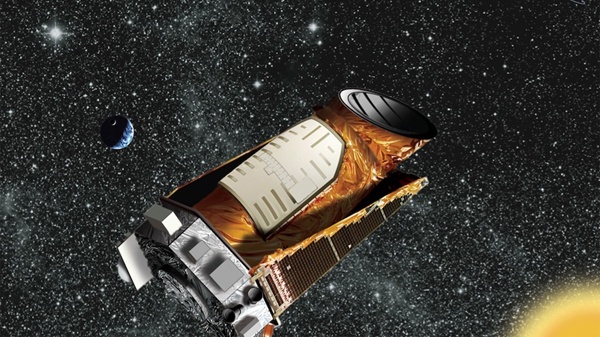
NASA's planet-hunting telescope has run out of fuel after a nine-year mission that found more than 2,600 planets orbiting other stars along with thousands of candidate worlds.

Using a cutting-edge imaging technology, US scientists examined more than 1 million cells in a 2-millimeter by 2-millimeter by 0.6 millimeter block of brain, and identified more than 70 different types of neurons.

UK scientists have been able to identify a chromosome signature for the group of children needing more intensive, aggressive chemotherapy treatment for the most common form of brain cancer.

Spain is due to close most of its coal mines by the end of 2018. Current Spanish government has rapidly reformed environmental policy and announced the launch of a long-delayed national climate plan.

The first comprehensive fine-scale map of the world's remaining marine and terrestrial wild places shows that just 23 percent of the world's landmass can now be considered wilderness, with the rest lost.


