

For centuries, scientists believed that light couldn't be focused down smaller than its wavelength. Now, researchers have created the world's smallest magnifying glass, which focuses light a billion times more tightly, down to the scale of single atoms.

Scientists have pinpointed a network of three specific regions in the brain that appear to be crucial to consciousness.
Scientists have, for the first time, achieved both lasing and anti-lasing in a single device. Their findings lay the groundwork for developing a new type of integrated device with the flexibility to operate as a laser, an amplifier, a modulator, and a detector.
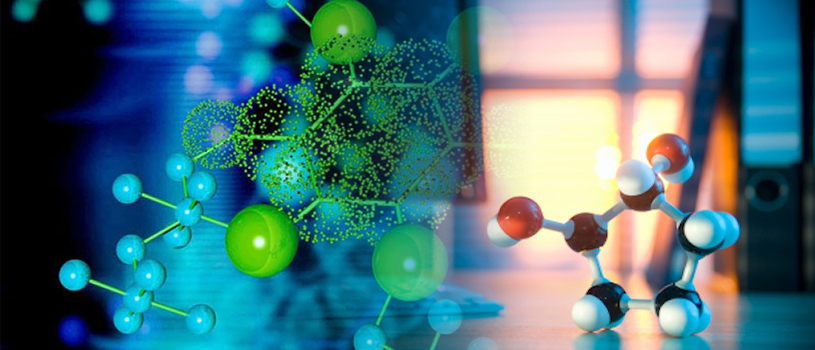
Rydberg molecules are formed when an electron is kicked far from an atom's nucleus. A physicist theorized in 2002 that such a molecule could attract and bind to another atom.

We humans may be more aligned with the universe than we realize. Scientists have discovered that neutron stars and cell cytoplasm have something in common: structures that resemble multistory parking garages.

A major technological advance in the field of high-speed beam-scanning devices has increased the speed of 2-D and 3-D printing by up to 1000 times.

After sensing dangerous chemicals, the carbon-nanotube-enhanced plants send an alert.

Since these chips can mimic the microarchitecture and functions of lungs, hearts, and intestines, they may eliminate the need for living subjects.

Using DNA sequences, scientists decode new antibiotics used in gut warfare.

Researchers have now used direct stimulation of the human brain surface to provide this basic sensory feedback through artificial electrical signals, enabling a person to control movement while performing a simple task: opening and closing his hand.

A new research by Newcastle University published in the journal PNAS has found that just like our skin over time, brain's folding is subject to aging via a loss of elasticity.

Imagine being in an accident that leaves you unable to feel any sensation in your arms and fingers. Now imagine regaining that sensation, a decade later, through a mind-controlled robotic arm that is directly connected to your brain.

Researchers at Cornell University have engineered a new magnetic material that could potentially make electronics 100 times "greener". Could this be the dawn of room-temperature superconductors?

For the first time, scientists have observed the formation of quasiparticles - a strange phenomenon observed in certain solids - in real time, something that physicists have been struggling to do for decades.

Three scientists working in the United States were honored for discoveries of "topological phase transitions and topological phases of matter".


