

A new study suggests that dark matter may have originated from a separate "Dark Big Bang," occurring shortly after the birth of the universe.

Researchers set a new benchmark, capturing the physics of dark and atomic matter with unmatched precision.

The Milky Way is only one system and may not be typical of how other galaxies formed. That's why it's critical to find similar galaxies and compare them

A team of researchers has just found that the predicted curvature of space-time calculated using relativity does not always quite match up to what we observe

The history of water on early Mars is not certain. Determining when water first appeared, where and for how long, are all burning questions that drive Mars exploration.

A still-forming planet has been detected early in its birth process, thanks to what may have been a chance encounter with a passing star that flipped part of the obscuring disk out of the way, exposing the baby planet.

NASA's Curiosity Mars rover viewed these yellow crystals of elemental sulfur using its Mast Camera. The discovery marks the first time this mineral has ever been found in a pure form on Mars.

Measurements over the years show that the planet's upper atmosphere is cooling and that the temperature has halved. None of the other planets experienced the same changes.

For the first time, we have succeeded in taking a zoomed-in image of a dying star in a galaxy outside our own Milky Way. The star WOH G64 is located a staggering 160 000 light-years from us.
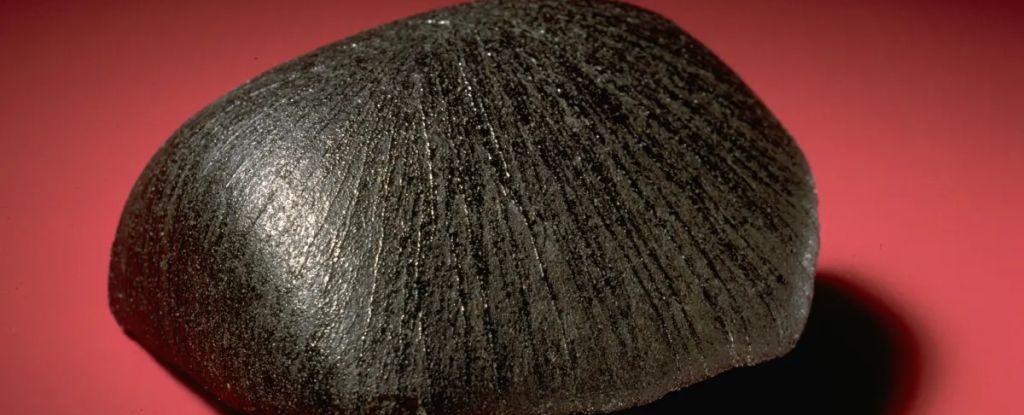
According to a new analysis of the Lafayette Meteorite, minerals within it formed in the presence of water 742 million years ago. It's a real breakthrough in the dating of aqueous minerals on Mars.

In recent years, astronomers have developed techniques to measure the metal content of stars with extreme accuracy.

Using data from the Dark Energy Spectroscopic Instrument (DESI), astronomers have completed the most precise gravity test ever taken.

New findings using data from NASA's IXPE mission offer unprecedented insight into the shape and nature of a structure important to black holes called a corona.

Astrobiologist Dirk Schulze-Makuch believes that humans may have unintentionally killed life on Mars in the 1970s.
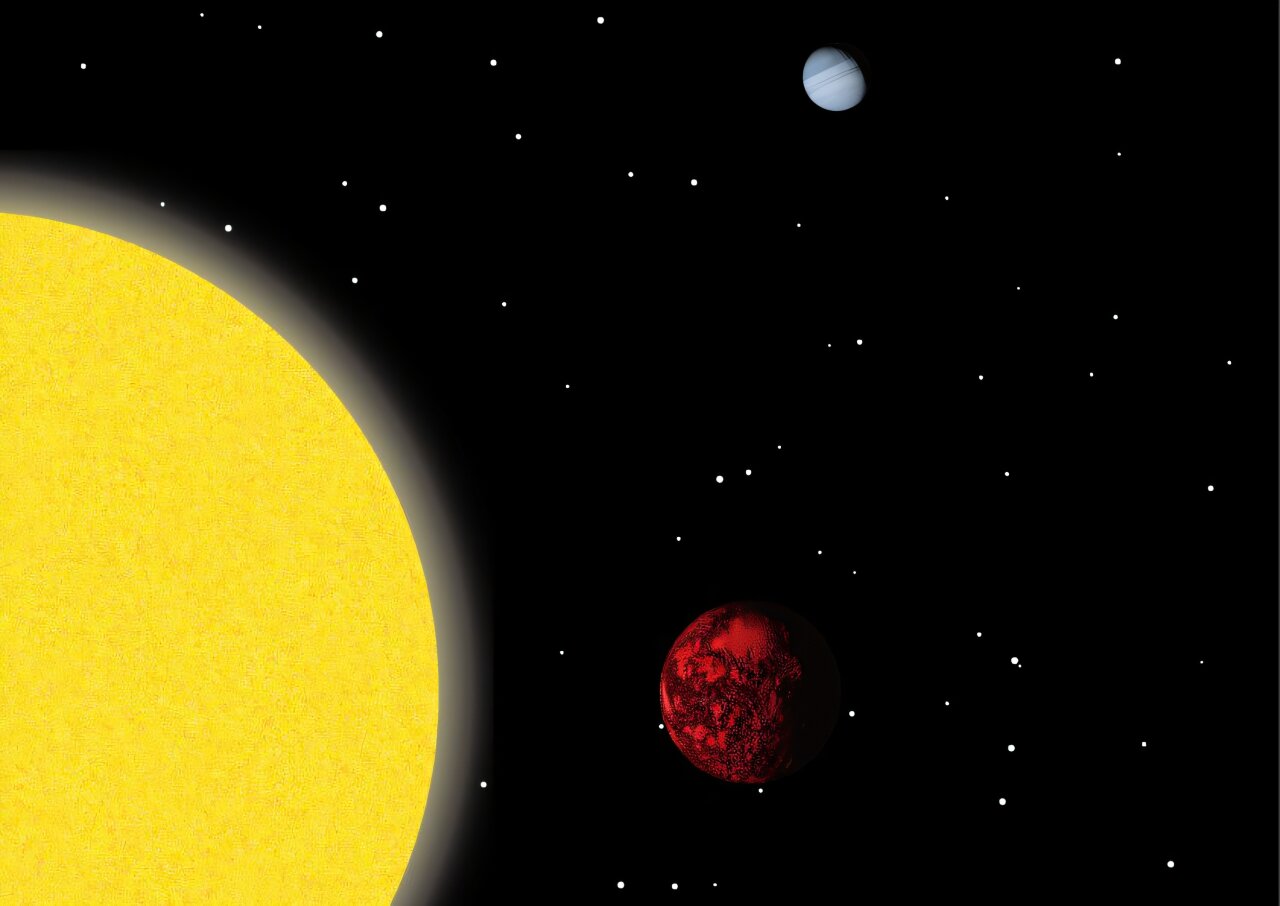
An international team has discovered a new multi-planet system around a sun-like star, including an ultra-short period planet with one of the highest densities ever measured.


