

Three scientists from the United States, France and Canada are awarded the Nobel Prize in physics for the development of short, intense laser pulses and for optical tweezers that can grab tiny particles.

The Nobel Prize Committee has honored two researchers for their role in pioneering a new avenue for cancer treatment, one where the therapy targets the immune system, which then goes on to attack the cancer.

In a new experiment, a team of researchers used laser pulses to accelerate photons to near the speed of light, which could have immense applications for space flight and particle physics.

A group of industrial chemicals humans started banning decades ago could cause many of the world’s orca whale populations to collapse over the next century, an alarming new study has found.

Trillion Planet Survey is an ambitious experiment, run almost entirely by US students. It uses a suite of telescopes aimed at Andromeda and other galaxies including our own in search for extraterrestrial life.

At a power plant in Linköping, Sweden, a municipal government company is burning rubbish to turn waste into energy. This is one of Sweden’s 34 plants that uses rubbish instead of coal or gas for heat and electricity.

Tesco announced the launch of reverse vending machines which they will trial in a number of stores. These recycling stations will pay 10p for each plastic bottle returned.

Canadian researchers have developed an accelerated way to produce magnesite at room temperature - a mineral which can capture the greenhouse gas carbon dioxide (CO2) from the atmosphere.

An international team of researchers has calculated the strength of nuclear pasta - extremely dense material deep inside the crust of neutron stars. The results show that nuclear it may be the strongest known material in the Universe.

Technosignatures are signs or signals, which if observed, would allow us to infer the existence of technological life elsewhere in the universe.
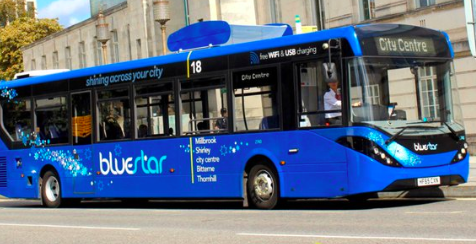
A bus designed to filter out harmful particles from the air as it drives has launched for the first time in the UK.

UK and US economists have created a model to assist policymakers in better understanding willingness issues related to climate change mitigation efforts.

A new type of battery developed by researchers at MIT could be made partly from carbon dioxide captured from power plants.

Japanese scientists have praised "the world’s first rover to land on the surface of an asteroid." The Hayabusa2 is expected to land a German-made lander carrying a larger rover in October.

The city of Los Angeles, a leading center of the world’s fashion industry, moved on Tuesday toward becoming the largest U.S. metropolis to outlaw the sale and manufacture of most fur products within its limits.


