

A pair of researchers at Columbia University and the New York Genome Center show that an algorithm designed for streaming video on a cellphone can unlock DNA's nearly full storage potential by squeezing more information into its four base nucleotides.

Supersolid is crystalline and superfluid at the same time.

Nanoengineers have 3-D printed a lifelike, functional blood vessel network that could pave the way toward artificial organs and regenerative therapies.
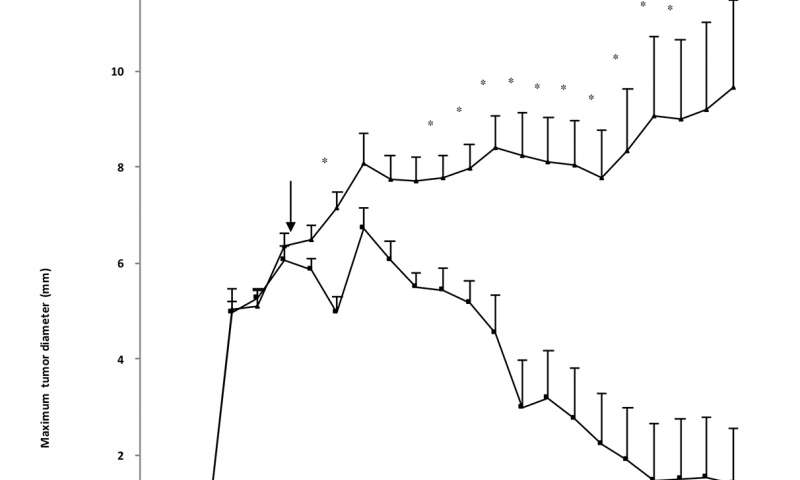
A chemical found in tumors may help stop tumor growth, according to a new study.
A clinical research publication led by Stanford University investigators has demonstrated that a brain-to-computer hookup can enable people with paralysis to type via direct brain control at the highest speeds and accuracy levels reported to date.

Sending an antibiotic-resistant superbug to a zero-gravity environment like the International Space Station will help NASA better understand how superbugs mutate to become resistant to available antibiotics.

Two-dimensional (2D) semiconductors made of materials such as transition metal dichalcogenides (TMDs) are forming the future of electronic devices.

A group of Russian and Swedish scientists just published a breakthrough paper. The scientists made an attempt to slow down ageing using a novel compound: artificial antioxidant SkQ1 precisely targeted into mitochondria.

Finnish researchers confirmed that those traveling to exotic locations often bring home drug-resistant bacteria in their intestines. But the people who took antibiotics while exploring those locales came back with the most extensively drug-resistant cargo.
Researchers have confirmed that becoming a parent brings about more than just the obvious offspring - it also rewires the parents' brain.

The system, a portable brain-machine interface, translates brain activity into simple yes or no answers to questions with around 70 percent accuracy.
Scientists have now found a way to create 3-D heart tissue that beats in synchronized harmony that will lead to better understanding of cardiac health and improved treatments.

Microfluidics, electronics and inkjet technology underlie a newly developed all-in-one biochip that can analyze cells for research and clinical applications.

By comparing standard theory and experiment, they show a discrepancy which can indicate new physics.

Two teams built a time crystal, the first examples of a non-equilibrium form of matter.


