
Synthetic biology meets smart manufacturing.
Researchers in Ireland have fabricated printed transistors consisting entirely of 2-dimensional nanomaterials for the first time. This breakthrough could unlock the potential for numerous applications

Researchers report that they have developed a self-healing polymeric material with an eye toward electronics and soft robotics that can repair themselves.

To help spur the next agricultural revolution, researchers have invented a "bionic" leaf that uses bacteria, sunlight, water and air to make fertilizer in the very soil where crops are grown.

Crew members aboard the International Space Station will begin conducting research this week to improve the way we grow crystals on Earth.

A type of bacteria accidentally discovered during research could fundamentally reshape efforts to cut the huge amount of electricity consumed during wastewater clean-up. The discovery has upended a century of conventional thinking.

Printing of metal structures with complex 3D architectures will have a variety of uses from batteries to biological scaffolds.

Scientists at National University of Singapore have created a transparent smog-filtering window screen.

Researchers have created a low-cost, portable smartphone-based cancer screening device that can, for the first time, evaluate several samples at once with lab quality results.

The balled structure reveals organization, which is critical for gene activity.

The use of nanotechnology in medical procedures may just be a few short years away, according to new research.

A new study could change scientists' understanding of how the brain works - and could lead to new approaches for treating neurological disorders and for developing computers that 'think' more like humans.
Now, researchers in Cleveland, Ohio have taken a significant step toward defeating antibiotic-resistant infections by combining two different antibiotics that each block a different kind of drug-destroying enzyme secreted by bacteria.

Two separate research teams managed to create what looked an awful lot like time crystals back in January, and now both experiments have successfully passed peer-review for the first time, putting the 'impossible' phenomenon squarely in the realm of reality.
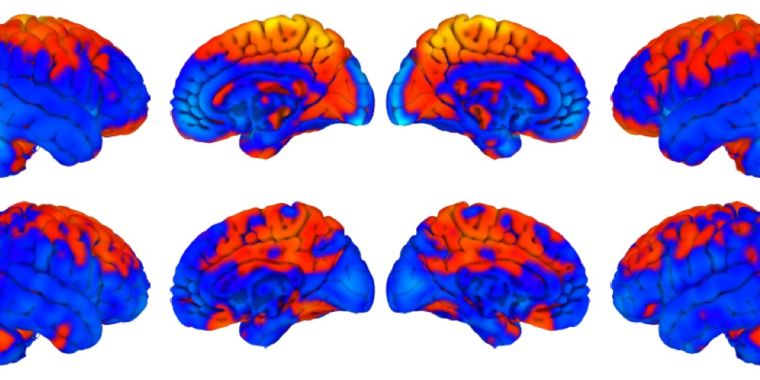
A new study provides some of the first data on the changes in brain structure during spaceflight. Scientists found decreases in some gray matter areas and increases in gray matter volume for regions of the brain that control leg movement.


