
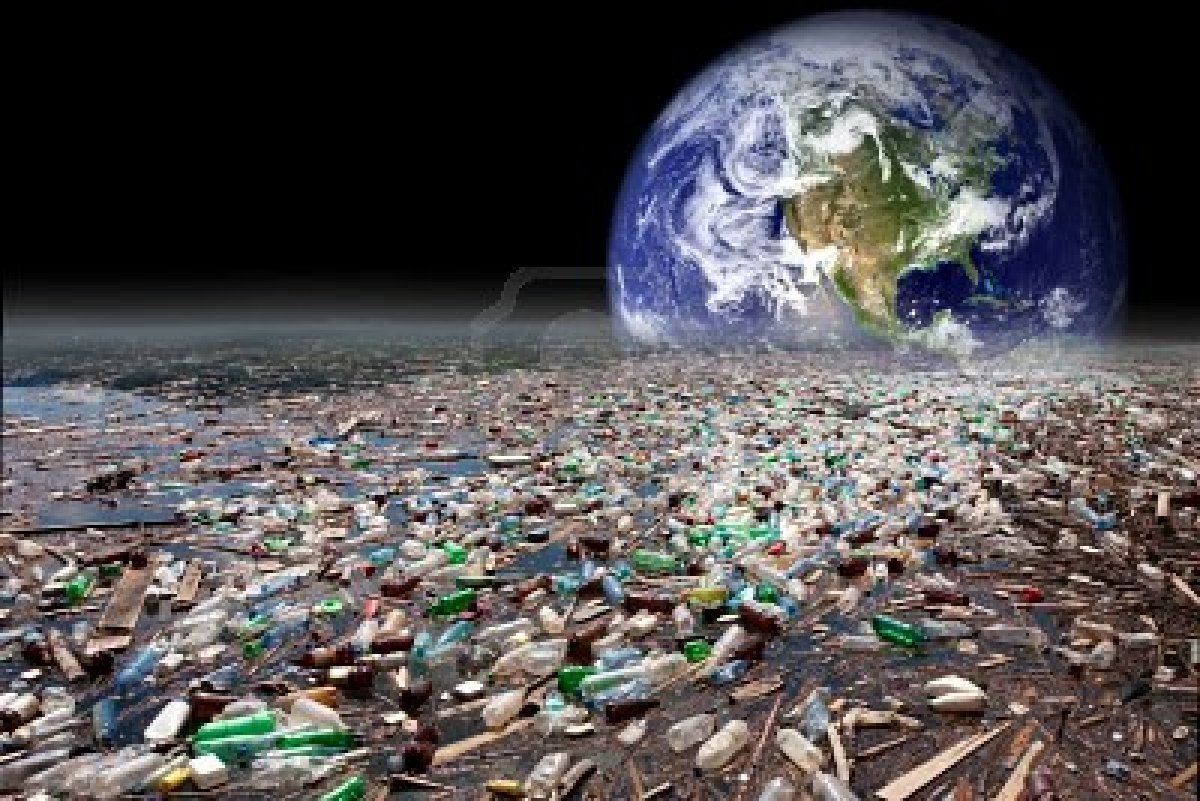
National Geographic is launching of Plastic or Planet initiative. It will be a long-term, multi-year commitment.

Engineers have created a 3D-printed smart gel that walks underwater and grabs objects and moves them. The watery creation could lead to soft robots.

An international team of astronomers is releasing the most comprehensive, high-resolution ultraviolet-light survey of nearby star-forming galaxies.

Transiting Exoplanet Survey Satellite – TESS – has snapped a stunning test photo showing an estimated 200,000 stars cantered on the southern constellation Centaurus.

An international study led by the University of Queensland has found that human behavior is dramatically affecting a region of 2.3 million square miles - around twice the size of Alaska.
A robotic system has been developed to automate the production of human mini-organs derived from stem cells. This will expand the use of mini-organs in basic research and drug discovery.
A new global, satellite-based study of Earth's freshwater found that Earth's wet areas are getting wetter, while dry areas are getting drier.

Findings show that musicians and bilinguals require less effort to perform the same task, which could also protect them against cognitive decline and delay the onset of dementia.

Astronomers have observed a galaxy 13.3 billion light years away that includes stars that must have been shining just 250 million years after the Big Bang.

Australian metal additive manufacturing company Titomic today announces the launch of the world’s 'largest' metal 3D metal printer at its state of the art facility in Melbourne, Australia.

Citing data collected by NASA's Galileo probe more than two decades ago, scientists report that giant jets of water are spouting more than 100 miles off Jupiter moon Eupora's surface.

Iceland has today become the first UK supermarket to highlight which of its own-label products are plastic free. It will do this using the Plastic Free Trust Mark – the world’s first accreditation for plastic-free packaging.

Approximately 239,000 Indian girls under the age of 5 die every year due to neglect. The preference for boys in India encourages prioritizing food, educational opportunities, and medical attention for boys over girls.

The Mars Helicopter, a small, autonomous rotorcraft, will travel with the agency’s Mars 2020 rover mission, scheduled to launch in July 2020, to demonstrate the viability and potential of heavier-than-air vehicles on Mars.

Scientists have used a powerful X-ray laser for an experimental set-up that produced an exotic state of water. Researchers hope to learn more about the peculiar characteristics of Earth's most important liquid.


