

The world's first plastic-free flight took off from Portugal and flew to Brazil on December 26th. The plane carries no single-use plastics – but aren't we ignoring a much bigger environmental issue?

Scientists in Germany have figured out a way to identify male eggs prior to hatching, which eliminates need for live culling.
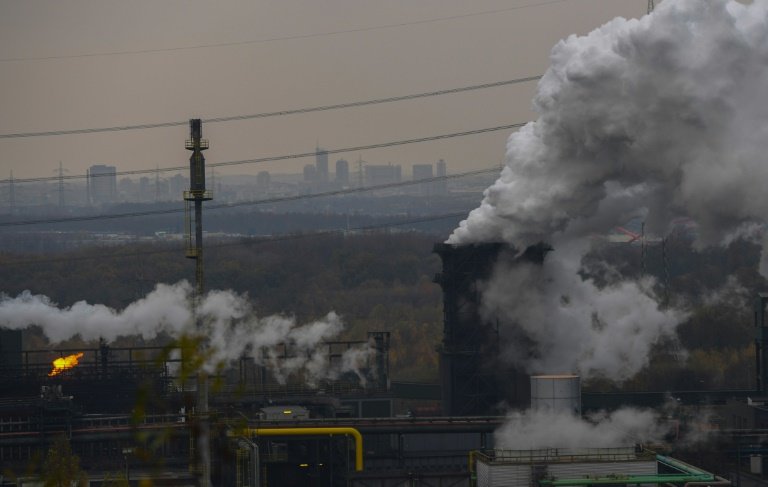
European Union member states and the European Parliament agreed Wednesday to reform the bloc's electricity market, including a call to end coal subsidies by 2025.

Technosignatures are what we humans would recognize as signs of technologically-advanced activity of an extraterrestrial intelligence.

New Future Transportation (NFT) is developing an electric car prototype with wings that aims to solve congestion and also be affordable at $50,000.

IonQ was founded on a gamble that 'trapped ion quantum' computing could outperform the silicon-based quantum computers that Google and others are building. As of right now, it does.

From bridges to cars, 3D printing proved this year that it’s still relevant and exciting.

Professional and amateur mathematicians from a worldwide research project called the Great Internet Mersenne Prime Search (GIMPS) have discovered the largest known prime number.

The volcano that triggered a deadly tsunami in Indonesia late Saturday emerged from the sea around the legendary Krakatoa 90 years ago and has been on a high-level eruption watchlist for the past decade.

Tel Aviv University study describes a process to make bioplastic polymers that don't require land or fresh water. The new process produces 'plastic' from marine microorganisms that completely recycle into organic waste.

The state of New Jersey has become the first in the United States to prohibit the use of wild and exotic animals by traveling shows and circuses.

The special feature of the Kiel system is its extremely high temporal resolution of 13 femtoseconds. This makes it one of the fastest electron cameras in the world.
New research suggests men in their child-bearing years should consider how THC could impact their sperm and possibly the children they conceive during periods when they've been using the drug.
This photo is captured by Chinese Satellite with 24.9 billion pixels of quantum technology. You can zoom in, zoom out when you look at it. You can clearly see every gesture, even face of pedestrians on the road.

A quarter century ago people called it “Garbage Island.” Today it has one of the world’s most efficient recycling programs, claiming 55 percent of trash collected from households being recycled.


