

The new research builds on a 2017 study that showed that long-term exposure to PM2.5 pollution and ozone increases the risk of premature death among the elderly in the U.S.

A recent study found that, in the last three decades, the region has warmed at three times the global rate, with an increase of 0.61°C per decade.

The accretion of new material during Pluto's formation may have generated enough heat to create a liquid ocean that has persisted beneath an icy crust to the present day.

Groups like Mars Habitat are dedicated to conducting simulated missions in analog environments. The lessons learned will not only prepare people to live and work in space but foster ideas for sustainable living here on Earth.

Magnetars generate the absolute most powerful magnetic fields the cosmos has ever seen – and astronomers have recently spotted a newborn. It appears to be the youngest- ever magnetar ever detected.

According to the United Nations annual report, more than 1% of humanity were forced to flee their homes last year. Of these displacements, 24.9 million were caused by disasters, caused by climate change.

Fugaku was jointly developed by Riken and the firm Fujitsu and has a speed of roughly 415.53 petaflops—2.8 times faster than the second-ranked US Summit supercomputer's 148.6 petaflops.

Chinese company CATL says it has new battery technology that lasts up to 2 million kilometers and 16 years—and it’s ready to manufacture the batteries on demand. The battery could power a car for 50 trips around the world.
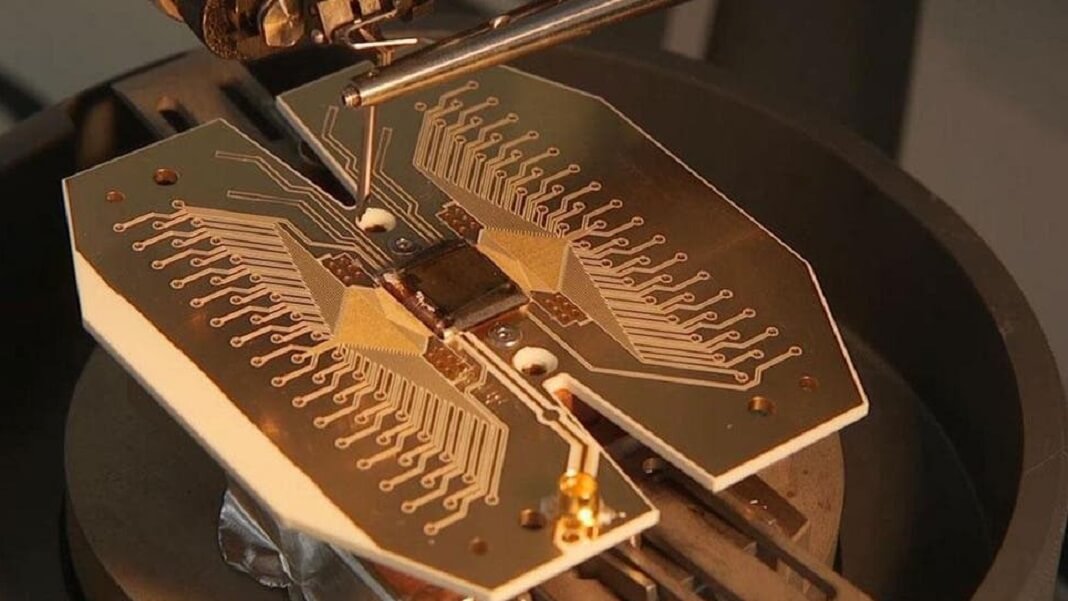
An ambitious plan to build a quantum computer the size of a soccer field could soon become a reality. A startup founded by the researchers behind the idea has just come out of stealth with $4.5 million in funding.

Quantum teleportation is an key way to transmit info in quantum computing. In a new step forward, researchers say it may be possible between electrons.

The Solar Orbiter project, a collaboration between the European Space Agency and NASA, has begun a critical new stage of the mission after the probe's first close encounter with the Sun.

XENON1T data from 2017-2018 has revealed an unexpected excess of low-energy interactions with the xenon’s electrons, more than the Standard Model of particle physics would predict.

At least 3.9 million early deaths are being averted worldwide every year by people being physically active, according to a new study using data from 168 countries.

Where you live has a significant impact on the likelihood that you will reach centenarian age. New research suggests that people who live in highly walkable, mixed-age communities may be more likely to live to their 100th birthday.

An Earth-like world is one that’s rocky and that orbits a Sun-like, or G-Type, star. The Milky Way has 400 billion stars, with 7 % of them being G-type, meaning that less than six billion stars may have Earth-like planets in our Galaxy.


