

China has launched a key module of a new permanent space station, the latest in Beijing's increasingly ambitious space programme. Although 5B rocket is "unpredictably" falling back to Earth after launching the module.

Nothing built by human hands has ever traveled faster than NASA's Parker Solar Probe. In late April, it smashed two wild space records. It was clocked at over 531,000 km/hour as it zipped through the sun's outer atmosphere.

U.S scientists claim to have developed a new plastic that can degrade by up to 98% in household compost in just few days, simply by adding heat and water.

New research has found that the vertical turbine design is far more efficient than traditional turbines in large scale wind farms, and when set in pairs the vertical turbines increase each other's performance by up to 15%.

Loss of water on land through ice melting and human-caused factors is changing the movement of the North and South poles.

Cases of COVID-19 are extremely rare among people who are fully vaccinated, according to a U.S. data analysis. COVID- 19 breakthroughs occur at the rate of less than 0.008 % of fully vaccinated people.

Researchers report the discovery of a super-Earth orbiting the star GJ 740, a red dwarf star situated some 36 light years from Earth. Its mass is around 3 times the mass of Earth.

The genes in question are related to interferons, the body's frontline virus fighters. Knowing which genes help control viral infection can greatly assist researchers' understanding of factors that affect disease severity.

Astronomers have spotted two close pairs of quasars in the process of merging as their host galaxies crash together in a slow-motion collision 10 billion years ago. Quasars make a profound impact on galaxy formation.

On April 17 New Horizons reached a rare deep-space milepost - 50 astronomical units from the Sun, or 50 times farther from the Sun than Earth is. New Horizons is just the fifth spacecraft to reach this great distance.

Last week, Virgin Galactic, the space tourism firm owned by Richard Branson, revealed its newest design, SpaceShip III, with the first vehicle in this line dubbed “VSS Imagine.”

A team of Dutch researchers reports realization of the first multi-node quantum network, connecting three quantum processors. Their findings mark an important milestone towards the future quantum internet.
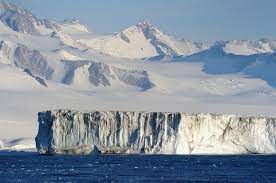
A new international study suggests that 34% of the Antarctic ice shelves could disappear by the end of the century if the planet warms up by 4°C compared with pre-industrial temperatures.

Monday, NASA's Ingenuity Mars Helicopter became the first aircraft in history to make a powered, controlled flight on another planet. The flight was a success.

The life-changing surgery took place in January as was a success. The surgery took about 18 hours and about 50 specialists, including surgeons, nurses anesthesiologists, airway specialists and residents.


