
SpaceX launches Falcon Heavy; Elon Musk's Tesla is enroute Mars' orbit.

The Netherland's national railway company, NS, has announced that all of its electric passenger trains are now 100 percent powered by wind energy.

A team from Singapore has devised a "fast, cheap and green method" to convert cotton-based fabric waste such as unwanted clothing into a type of aerogel.

A team from Australia have found a "quantum hack" - a way to modify qubit surface codes, improving quantum error correction by up to four hundred per cent.

If successful, Falcon Heavy will be the most powerful working rocket in use, the rocket that could go to Mars.
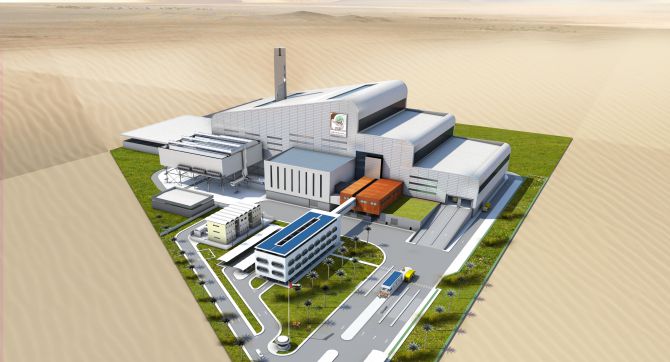
When up up and running it is expected to treat up to 2 million tons of solid waste every year. This is almost 60% of Dubai’s annual garbage production.

Hornsea Project One is expected to be operational in 2020, and it will produce power for more than one million homes.

In a historic vote, the Legislative Council of Hong Kong voted 49-4 to ban the trade of ivory by 2021.

An international team of astronomers has discovered one of the most extreme instances of magnification by gravitational lensing.

Chile currently gets between 35-40% of its electricity from coal but the the country's environment minister has just hailed "the beginning of the end of coal".

An EU official noted “with satisfaction” Cuba’s ambitious goal of having 24 percent of their energy from renewable sources by 2030.

The new project in South Australia is using Tesla’s residential battery system, the Powerwall, to create decentralized energy storage, which results in creating a massive virtual power plant.
Astrophysicists have discovered for the first time a population of planets beyond the Milky Way galaxy. Researchers were able to detect objects in extragalactic galaxies that range from the mass of the Moon to the mass of Jupiter.

Thanks to a new study by a team of Spanish researchers, the oldest star in the Milky Way may have finally been discovered.

The simulation consists of 18 simulations covering various scales - each a cubic mock-up of space up to 1 billion light years wide - tracing the evolution of the Universe from just after the Big Bang into the future.


