

For the first time since records began, the main nursery of Arctic sea ice in Siberia has yet to start freezing in late October. The delayed annual freeze has been caused by extreme warmth.

This new tool allows you to move around the world to see how concentrations of the powerful greenhouse gas vary in space and time. Just like CO2, Methane (CH4) is increasing in the atmosphere. It is now above 1,876 ppb.

During human evolution, the size of the brain increased. A new research shows that serotonin can act as a growth factor for the stem cells in the fetal human brain that determine brain size.

The connection may explain the high incidence of cancer among those who consume large amounts of dairy products and red meat, similar to the link between high cholesterol and an increased risk of heart disease.

NASA has confirmed, for the first time, water on the sunlit surface of the Moon. This discovery indicates that water may be distributed across the lunar surface, and not limited to cold, shadowed places.

An international team of researchers has found that in the first six months of this year, 8.8 percent less carbon dioxide was emitted than in the same period in 2019 - a total decrease of 1551 million tonnes.

Previous research has shown that Io's atmosphere is dominated by sulfur dioxide gas. Now, astronomers could, for the first time, clearly see the plumes of sulfur dioxide (SO2) and sulfur monoxide (SO) rise up from the volcanoes.

NASA's asteroid sampling aircraft OSIRIS-REx, which touched asteroid Bennu last week, has collected such abundant quantity of asteroid particles that it is jammed open and these particles are leaking slowly in the space.

U.K. prime minister Boris Johnson has affirmed government plans to ensure that the entire country is powered by offshore wind energy by 2030. The U.K. government will be required to generate at least 40GW of energy.

After 13 months of collecting data, history’s largest Arctic research expedition returned with grim news. “We witnessed how the Arctic Ocean is dying,” the mission leader said.

Concentration of N2O in the atmosphere increases strongly and speeds up climate change. In addition to CO2 and methane, it is the third important greenhouse gas emitted due to anthropogenic activities.

A team of U.S. astronomers have created the Pan-STARRS1 Source Types and Redshifts with Machine Learning (PS1-STRM), the world’s largest three-dimensional astronomical catalog.
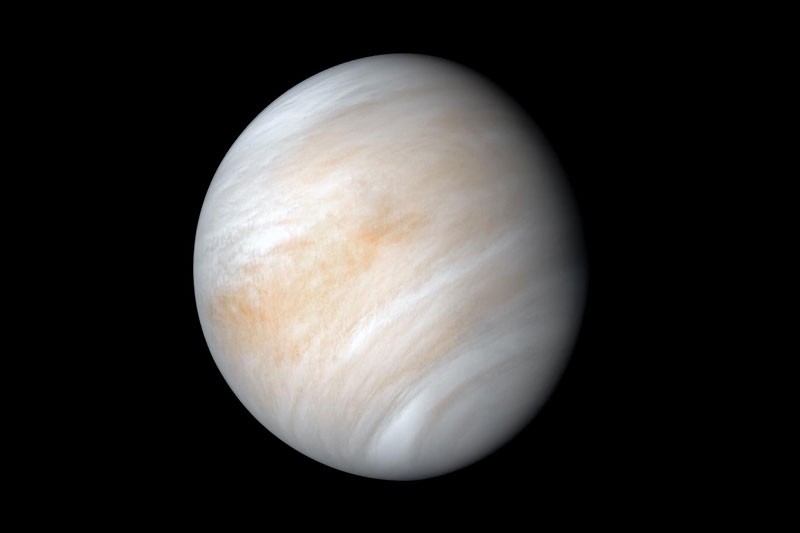
A team of researchers claims they've discovered the amino acid glycine in Venus' atmosphere. There are about 500 known amino acids, but only 20 are present in the genetic code. Glycine is the simplest of them.

The planet just recorded its hottest September since at least 1880. The data, most of which was released Wednesday, shows that 2020 is on track to be one of the hottest years on record.

The Ozone hole over the Antarctica continent has become unprecedentedly deeper and larger in the last 15 years, the latest finding of the World Meteorological Organization has shown. It has reached its peak of at 24 mil square km.


