
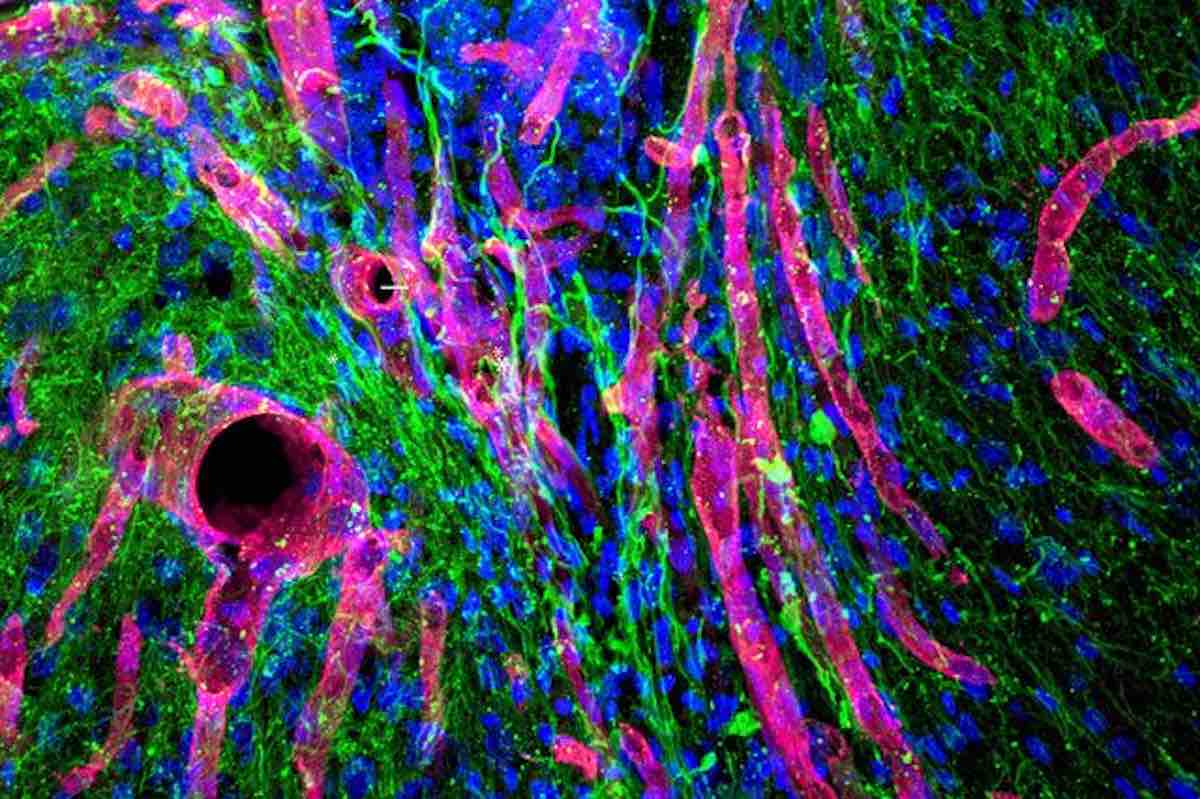
Researchers have just made a breakthrough discovery in how we can possibly treat stroke patients in the future.
Scientists have now simulated an atomic nucleus using a quantum computer. The results demonstrate the ability of quantum systems to compute nuclear physics problems.

Experiment called OPERA at CERN has released its final round of results, which add further evidence of neutrinos’ strange identity-swapping behavior.

MIT chemists have devised a way to rapidly synthesize and screen millions of novel proteins that could be used as drugs against Ebola and other viruses.

The agency just launched the Cold Atom Lab, a box that takes advantage of microgravity aboard the International Space Station and creates a temperature roughly 10 billion times colder than the vacuum of space.

A French nanorobotics team has assembled a new microrobotics system that pushes forward the frontiers of optical nanotechnologies.

The drug, called Aimovig works by using antibodies to block the effect of a protein molecule that plays a key role in triggering and sustaining migraines, known as calcitonin gene-related peptide, or CGRP.

Engineers have created a 3D-printed smart gel that walks underwater and grabs objects and moves them. The watery creation could lead to soft robots.

A robotic system has been developed to automate the production of human mini-organs derived from stem cells. This will expand the use of mini-organs in basic research and drug discovery.

Scientists have used a powerful X-ray laser for an experimental set-up that produced an exotic state of water. Researchers hope to learn more about the peculiar characteristics of Earth's most important liquid.

An international team has developed a novel tool to accurately predict eye, hair and skin color from human biological material, even a small DNA sample.

A newly developed sorbent-based technology has recently shown that it can harvest atmospheric moisture even when the relative humidity drops to around 10 percent.

Researchers found a new technique to "densify" wood where fibers assemble to make the cell walls stiff and strong, a process called cellulose nanofibrils (CNFs).

Researchers have developed a new platform that makes CRISPR less like a cutting tool and more like a word processor with a search-and-replace function.

Affordable, rapid DNA sequencing is causing a revolution in medicine and healthcare globally, and it's happening now.


