

The extended “heat dome” could be a taste of the future for the Pacific Northwest as climate change reshapes weather patterns worldwide.

There is now a 40 % chance that global temperatures will temporarily reach 1.5 C above pre-industrial levels in the next five years - and these odds are rising, says the World Metrological Organization.

Scientists from Scripps and the NOAA reported that levels of atmospheric carbon dioxide peaked in May, reaching a monthly average of nearly 419 parts per million.

More people were displaced by weather disasters in 2020 than by violent conflicts. Further, the publication indicates the number of internally displaced people in the world reached the highest level in history.

A piece of space debris has hit and damaged part of the International Space Station - namely, the Canadarm2 robotic arm. It's a reminder that the low-Earth orbit's space junk problem is a ticking time bomb.

The massive chunk of ice floating in the Weddell Sea was first spotted on May 13 2021, measuring approximately 170 km long and 25 km wide, it boasts a surface area of 4,300 sq km and is currently the world's largest iceberg.

Carbon pollution from China's coal-intensive economy last year outstripped the carbon pollution of the US, the EU, and other developed nations combined, making up a 27 % of all greenhouse gas emissions worldwide.

Researchers now estimate the clay sheets underneath Mexico City could ultimately compress by 30 % for another 150 years. Not only does this put infrastructure at risk, it also threatens water security for millions of people.

Loss of water on land through ice melting and human-caused factors is changing the movement of the North and South poles.
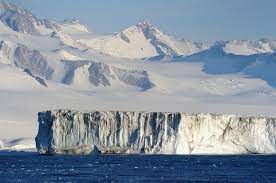
A new international study suggests that 34% of the Antarctic ice shelves could disappear by the end of the century if the planet warms up by 4°C compared with pre-industrial temperatures.

Direct observations for the first time confirmed the long-standing predictions: radiative forcings of Earth are increasing due to human actions, affecting the planet’s energy balance and ultimately causing climate change.

The concentration of atmospheric CO2 surged past 420 parts per million for the first time in recorded history this past weekend, according to a measurement taken at the Mauna Loa Observatory on Hawaii.

A new study revealed that summer could stick around for six months in the Northern hemisphere by 2100 if efforts to mitigate global warming don’t continue.

U.S. researchers found that, compared to previous generations, members of Generation X and Generation Y showed poorer physical health, higher levels of unhealthy behaviors and more depression and anxiety.

Children exposed to air pollution, such as wildfire smoke and car exhaust, for as little as one day may be doomed to higher rates of heart disease and other ailments in adulthood, according to a new study.


