

Two new papers show a 150 kilometer-thick layer of molten silicate rock at the base of the mantle envelopes Mars' liquid iron-alloy core.

A recent study suggests that Venus, typically viewed as a fiery wasteland, may have experienced Earth-like plate tectonics in its distant past.

Researchers using the NASA/ESA/CSA James Webb Space Telescope's NIRCam (Near-Infrared Camera) have discovered a high-speed jet stream sitting over Jupiter's equator, above the main cloud decks.

Crystals brought back from the Moon by Apollo astronauts in 1972 push back the age of the moon by 40 million years, to at least 4.46 billion years old.

So-called chorus waves have been recorded at Earth, and Jupiter, and Saturn; and observed at Uranus and Neptune. Now, international scientists have detected them whistling around Mercury.

A new method for scanning telescope images for the faintest signs of rock far beyond Pluto has uncovered evidence that our Solar System's disc of material extends far further into interstellar space than we thought.

Among the most striking geologic features on the surface of Arrokoth is the ensemble of large, broadly similarly sized mound-like features seen on the larger lobe.

Sunlight on Mars interacts with iron-rich dust that hangs in the atmosphere. This ultimately scatters lower-frequency red light through the sky during the day. At twilight, however, the red light is filtered away and the sky glows a cool blue.

Resent studies question the evolution of the Moon magnetic field thanks to its demonstration of the existence of the inner core.

A similar solar storm today would be catastrophic for modern technological society—potentially wiping out telecommunications and satellite systems, causing massive electricity grid blackouts, and costing us billions of pounds.

Mercury has shrunk by7 km. Most of this happened long ago, but now we have evidence that it continues.
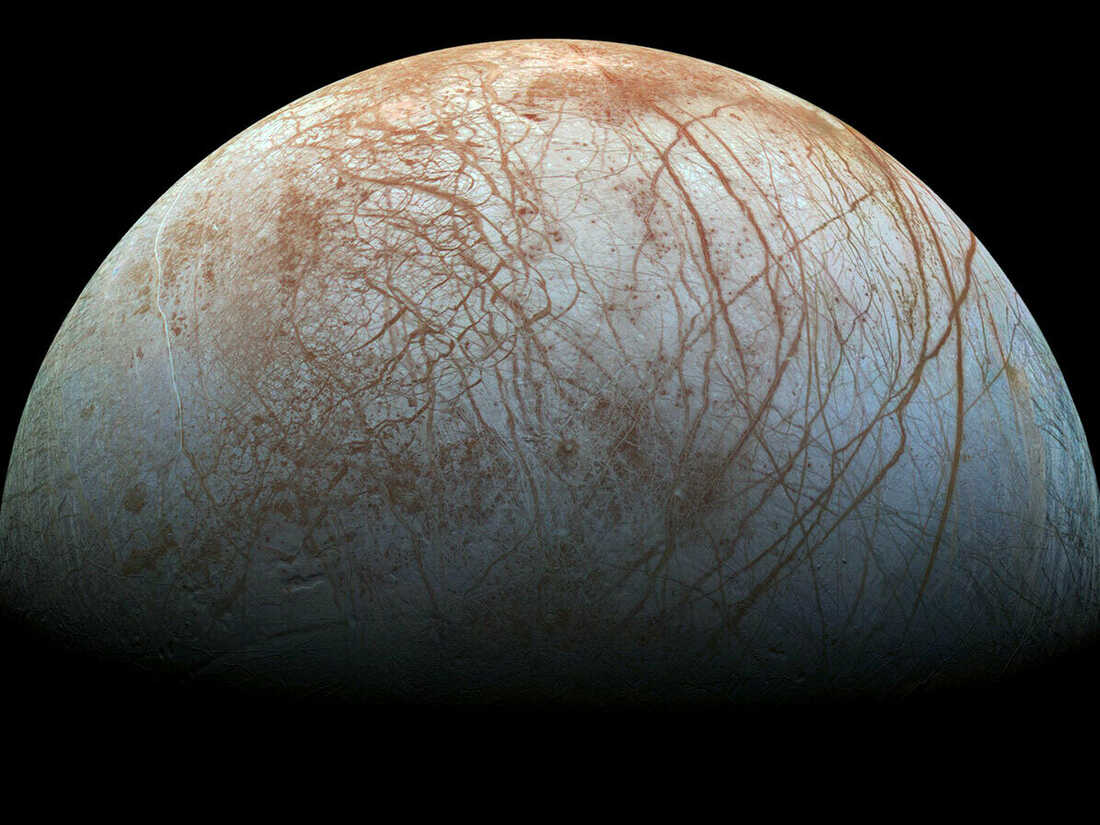
Now, using the James Webb Space Telescope, astronomers have found carbon on Europa’s surface, which likely originated in this ocean. The discovery signals a potentially habitable environment in the ocean of Europa.

NASA's OSIRIS-REx mission has delivered pieces of asteroid Bennu, which scientists hope will offer a window into the early era of the Solar System billions of years ago.

India’s Chandrayaan-3 moon rover has confirmed the presence of sulphur and detected several other elements on the lunar south pole, says the country’s space agency.

According to a new analysis of lunar craters, these pocks and divots that mar and characterize the lunar surface are too young for the long-term retention of ancient reservoirs of water ice.


