

The planet-hunting TESS spacecraft has found its first Earth-size planet orbiting a star located about 53 light years away. The star, HD 21749a, also hosts at least one other world, a warm “sub-Neptune” planet.
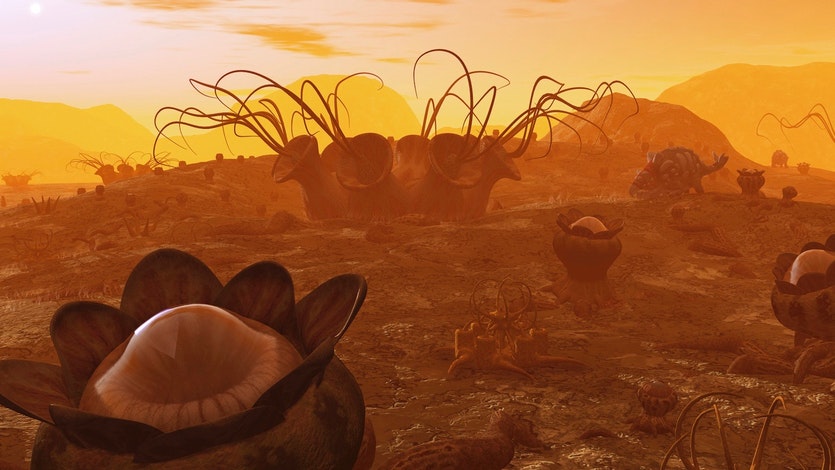
Hopes for finding life on four rocky exoplanets relatively close to Earth have been boosted by new modelling that shows biological systems could survive the intense and prolonged bursts of X-ray and UV radiation.

Scientists have discovered a giant exoplanet with a mass almost 13 times that of Jupiter in an evolved binary system. This is the first confirmation of an exoplanet in a system of this kind.

A research into how life evolved on Earth has shown that water alone does not guarantee life – nor does the presence of oxygen gas. And that two other major biosignatures, carbon dioxide and carbon monoxide could be needed.

Barnard b or GJ 699 b – might have microbes or other simple life in its environment as long as there is a lot of thermal activity within the planet itself. This would theoretically provide enough energy for life to survive.

According to new study, an extrasolar planet orbiting Barnard’s star, an M-type (red dwarf), that is just 6 light years away could actually support life, assuming the planet experiences enhanced geothermal activity.
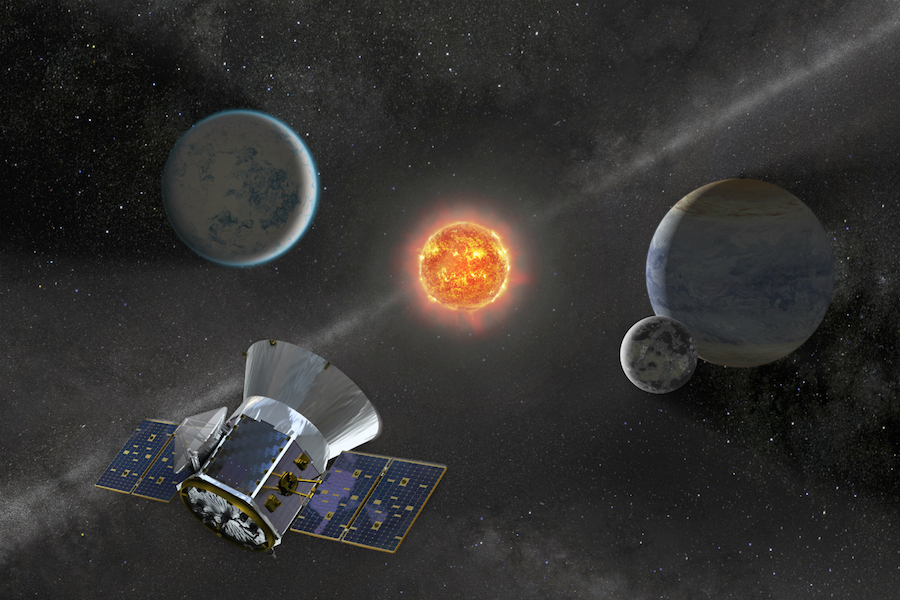
The three confirmed planets discovered so far using TESS are all within 100 light-years of our solar system, substantially closer than the nearly 2,700 validated worlds detected using Kepler.

Japanese scientists utilized a mix of ground and space based telescopes and revealed over 100 new extrasolar planets.

Recent research suggests that most, if not all, stars are born with a binary twin. Our Sun is a solitary star, but there's evidence to suggest that it did have a binary twin, once upon a time and it might have just been found.

Studying two decades of data on Barnard’s Star, astronomers have found a rocky super-Earth with a mass of at least 2.3 times that of Earth that orbits the star every 233 days or so.
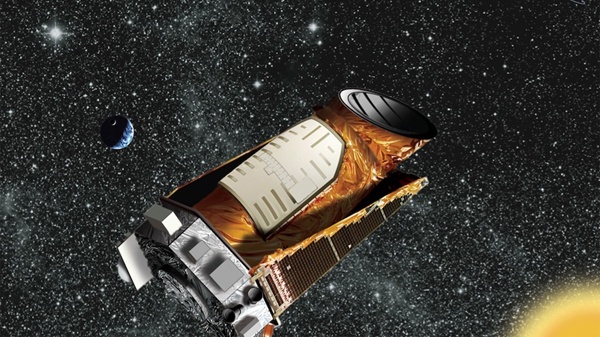
NASA's planet-hunting telescope has run out of fuel after a nine-year mission that found more than 2,600 planets orbiting other stars along with thousands of candidate worlds.

Astronomers have discovered 4 very large gas planets orbiting a young star only 2 million years old. Looks like we need a new model of planetary formation.

Astronomers reviewing data collected by NASA’s Kepler space telescope have found the first evidence for a possible “exomoon” orbiting a gas giant planet 8,000 light years away.

NASA's TESS, made an early discovery of "super-Earth" and "hot Earth" planets in solar systems at least 49 light-years away, marking the satellite's first discovery since its April launch.

A new NASA-led study shows that Proxima b could support the existence of an ocean on its dayside, which means it could still be habitable.


