
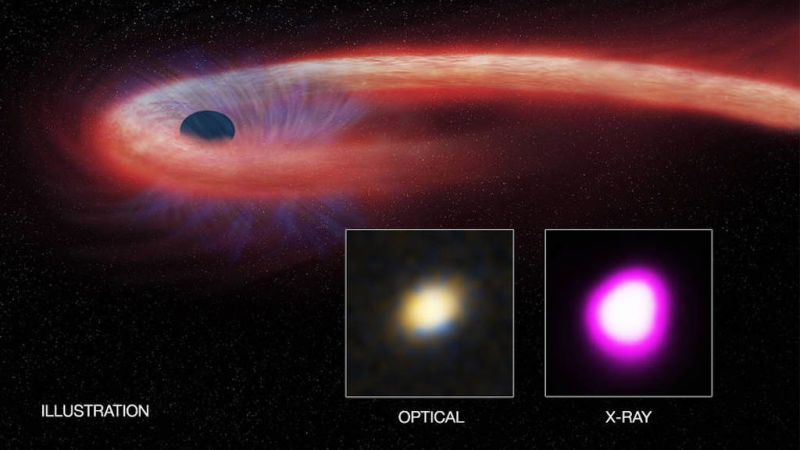
New research details the longest black hole brunch ever studied, in which a supermassive giant ripped apart a neighboring star and feasted on it for almost 10 years.

Researchers from the University of Edinburgh have developed a photocatalytic material that purifies drinking water using the power of the sun.

Even as the capabilities of self-driving cars continue to evolve, it is not a given that consumers will choose to buy one. What is equally likely is that autonomous vehicles will transform the automotive industry entirely.

Businesses and local governments aren’t doubting climate change, and they aren’t waiting to do something about it. Sea-Tac, USA may become the first airport to fuel all of its flights with biofuel.

3D-printed plastics are expected to perform well under stress and in extreme temperatures.

The two green towers could provide the city with a breath of fresh air, producing around 132 pounds of oxygen every day as they absorb carbon dioxide. They’ll accomplish this air-cleaning feat with 1,100 flourishing trees and 2,500 cascading shrubs and plants.

A new California facility can power 15,000 homes using lithium-ion batteries.

Danish energy giant DONG has committed to phasing out coal from its energy mix by 2023. DONG has already reduced its coal dependence by 73% since 2006.

Hong Kong flag carrier Cathay Pacific will switch to biofuels made from landfill rubbish on select long haul flights, reports said Tuesday, in an effort to cut harmful emissions.

The new results support evidence of a strange symmetry in measurements of one neutrino mass. In particle physics, symmetries often indicate underlying physics that scientists haven't yet unearthed.

Theoretical physicists and cosmologists deal with the biggest questions , like “Why are we here?” “When did the universe begin?” and “How?” Another questions that bugs them, and likely has bugged you, is “What happened before the Big Bang?”

Recent construction projects in Wales, Iceland and the Netherlands conjure a future of off-grid intentional communities and geothermal biodomes.
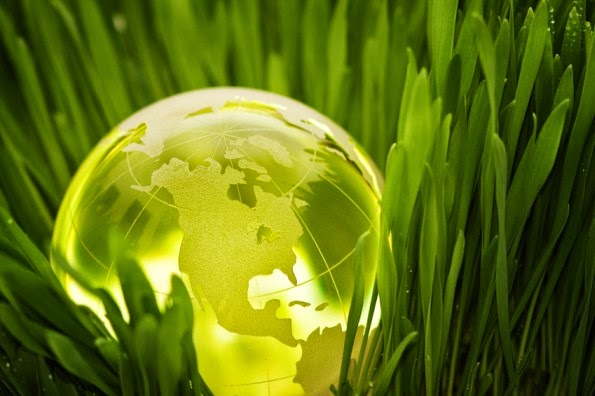
The New Plastics Economy is a three-year initiative to build momentum toward a plastics system that works. The initiative provides a global action plan to align with the principles of the circular economy.

“There is no more business as usual in the energy sector. There are a number of low-carbon technologies about to achieve critical mass decades before some companies expect”, says James Leaton, head of research at Carbon Tracker.

The holographic principle tells us that we can achieve the same physics by reducing the number of dimensions by one and removing gravity.


