

The bill that is scheduled to take effect on Jan. 1, 2021, will specifically prohibits the sale and distribution of sunscreens that contain oxybenzone and octinoxate.

Three offshore wind plants will be constructed in the North Sea and three in the Baltic Sea between 2021 and 2025.

A High school student from USA has discovered that carbon, which usually only forms four bonds, can end up forming a mind-boggling seven bonds, a higher number than ever considered possible for the element.

Now three independent European research groups have managed to entangle not just a pair of particles, but separated clouds of thousands of atoms.
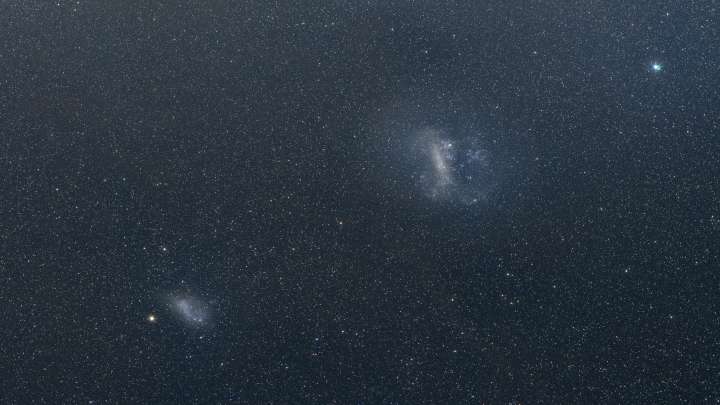
Scientists have found what looks like an exceedingly small galaxy in orbit around our Milky Way. Named Hydrus 1, it’s located about 90,000 light-years from Earth, between the Small and Large Magellanic Clouds.

Unlike plastics made from petroleum products, the new kind can be converted back to its original small-molecule state, and remade into new plastics over and over.

Bhutan has been referred to by several places as the world’s first (and only) carbon negative country, in that it removes four times more greenhouse emissions then it produces.

Australia’s government has pledged hundreds of millions of dollars toward protecting the Great Barrier Reef, in what’s being called the largest single investment in the embattled ecosystem ever.

Tech evangelists dream of a future when we’re all liberated from mundane work by artificial intelligence. In the long term, automation of labor might benefit the human species immensely.

A team of researchers in South Korea have developed a 3D printing platform for creating customized food items. The technology can be precisely control the structure of food at a microscopic level.

A team of UK researchers has developed a special fluid gel that can be used as a medium for suspension of biological material. This will solve a problem faced by scientists attempting to replicate soft human tissue.

A reverse vending machine manufacturer in Malaysia creates one-of-a-kind take-back machines that reward consumers with gold bullion. The machines accept both plastic bottles and aluminium cans.

The Terra HP DC charger offers 120-miles of range in 8 minutes and can fill cars up at a rate nearly three times that of Tesla Superchargers.

Blue Origin flew its New Shepard system for the eighth time on Sunday. The company seems to be getting closer to flying people on the suborbital tourism launch system—and perhaps beginning ticket sales.

The ExoMars Trace Gas Orbiter has released the first images from its new orbit, taken on April 15 from 400 kilometers above the Martian surface.


