

A Chinese probe has delivered the first samples to be collected from the Moon in more than 40 years. The Chang’e-5 sample return capsule floated down to the snowy plains of Inner Mongolia.

For the first time in the UK - and possibly the world - air pollution has been recognized as a cause of a person's death. London court has found that air pollution "made a material contribution" to the death of a nine-year-old.

With low oxygen concentrations increasing in lakes and reservoirs across the world, these ecosystems will produce higher concentrations of methane in the future, leading to more global warming.

Astronomers have now found a so-called “cold quasar” in which star formation has managed to continue even in the presence of a ravenous supermassive black hole. The team studied a quasar 5.25 billion light years away.

Researchers have discovered a new superhighway network to travel through the Solar System much faster than was previously possible. They could be used to send spacecraft to the far reaches of our planetary system.
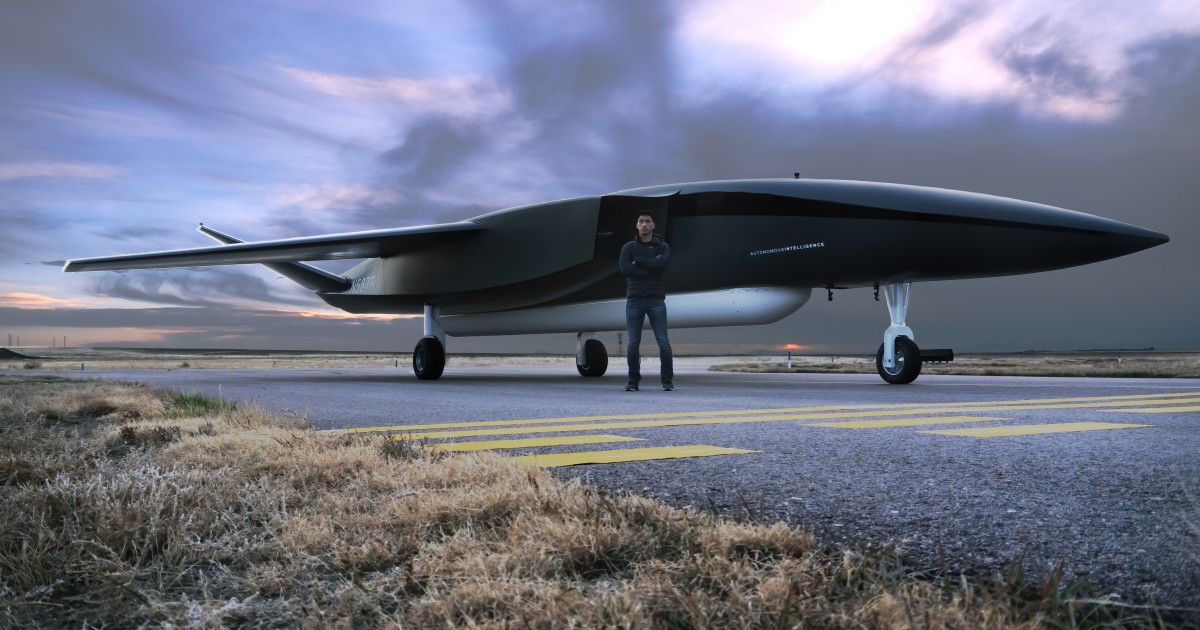
US-based firm Aevum has unveiled a massive drone called the Ravn X that is designed to act as an autonomous, airborne launch system for small satellites.

The future of work may look a lot like science fiction in a few years as advances in augmented and virtual reality as well as 5G and 6G wireless technologies revolutionize the way we interact with one another digitally.

The industrial slowdown due to the COVID-19 pandemic has not curbed record levels of CO2. Carbon dioxide levels saw another growth spurt last year past 410 parts per million on average.

A new study has found that deforestation in the Amazon has destroyed eight per cent of the world’s largest rainforest, between 2000 and 2018. The Amazon is often referred to as the ‘lungs of the planet’ .

A Chinese probe transferred rocks it gathered from the moon to an orbiter on Sunday in preparation for returning samples to Earth for the first time in almost 45 years, the country's space agency announced.

Sentinel-6 satellite lifted off on a SpaceX Falcon 9 rocket on Nov 21. Its mission now is to measure and chart the rise of the sea level more precisely than ever before.

The HL-2M Tokamak reactor is China's largest and most advanced nuclear fusion experimental research device, and scientists hope that the device can potentially unlock a powerful clean energy source.

The container with material from a space rock called Ryugu parachuted down near Woomera in South Australia on Saturday evening. The samples were originally collected by the Japanese spacecraft Hayabusa-2.

The instrument platform of the 305-meter telescope at Arecibo Observatory in Puerto Rico collapsed overnight earlier this week. Its legacy includes discovery of the first pulsars, first exoplanets and first ever radar map of Venus.

China launched an ambitious mission on Tuesday to bring back rocks and debris from the moon’s surface for the first time in more than 40 years – an undertaking that could boost human understanding of the moon and solar system.


