
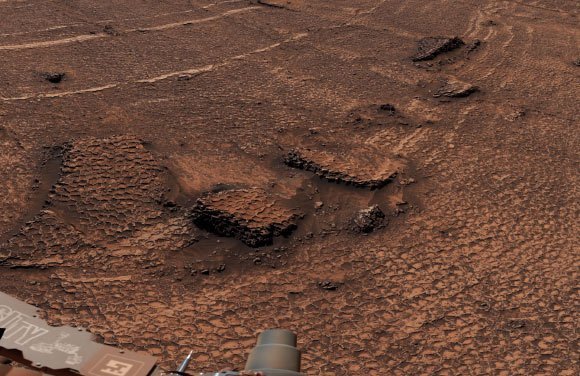
NASA’s Curiosity rover has stumbled on the largest patch of polygon-shaped ground fractures it has ever seen on Mars, a discovery that could reveal more about the planet’s watery past.
The researchers found that additional studies of the data from Curiosity show that non-biological sources they had considered don’t fully explain the organics. They conclude, therefore, that a biological source is a reasonable hypothesis.

Raging megafloods, likely triggered by the heat of a meteoritic impact, roared across Gale Crater near the equator of Mars some 4 billion years ago, creating gigantic sedimentary ripples visible today.


