

This seems to be a trend. A related study published late last year showed that half of all National Parks are experiencing early springs compared to last century. The US-NPN says this trend is likely the result of climate change.

Average life expectancy is set to increase in many countries by 2030 - and will exceed 90 years in South Korea, according to new research.

Inventors Starship Technologies have taught their robots to avoid traffic lights with buttons and are now giving them speakers and microphones to help them navigate pedestrian crossings.

A team earned the $25,000 grand prize for creating a virtual-reality platform that gives residents in assisted-living facilities the chance to explore the world virtually.

Is flexible good enough though? Don’t we really want morphing, stretchable smart tablets that expand from a strap-hanging, one handed commuter-use form-factor, to lean-back reading and media consumption copious sizes?
A clinical research publication led by Stanford University investigators has demonstrated that a brain-to-computer hookup can enable people with paralysis to type via direct brain control at the highest speeds and accuracy levels reported to date.

Sending an antibiotic-resistant superbug to a zero-gravity environment like the International Space Station will help NASA better understand how superbugs mutate to become resistant to available antibiotics.

Two-dimensional (2D) semiconductors made of materials such as transition metal dichalcogenides (TMDs) are forming the future of electronic devices.

Eminent physicist Jo Hermans acknowledges that achieving sustainable transport in the post-fossil fuel era will be a huge challenge— but finds that liquid hydrogen could offer a potential solution for future air travel.
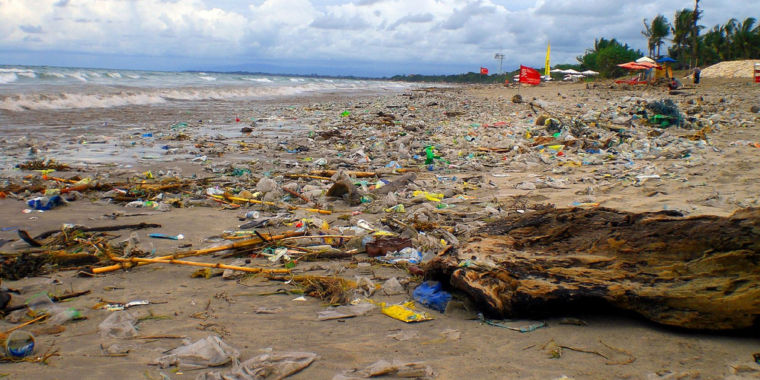
Dell project will recycle "ocean plastic" into product packaging.

Astronomers have found seven Earth-sized planets around a cool red dwarf, all of which have the potential for liquid surface water.

California Senate leader introduces 100% renewable energy bill by 2045, competing with Hawaii for most aggressive renewable energy mandate in US.

Almost 20 per cent of the food made available to consumers is lost through over-eating or waste, a study suggests. The world population consumes around 10 per cent more food than it needs, while almost nine per cent is thrown away or left to spoil, researchers say.

Investors are being urged to engage with banks using their voting rights to increase the role banks play in the transition to a low-carbon economy.


