

This month, the Estonian government kicks off a program that aims to collect the DNA of 100,000 of its 1.3 million residents. In return, it will offer them lifestyle and health advice based on their genetics.

Norway said on Thursday it wants to buy electric passenger planes in the coming years to help slow climate change, building on its success with big tax breaks that have made it the world leader in electric car sales.

The 12 metre-long stainless steel bridge will be the world’s largest 3D printed metal structure. The finished structure will be opened to pedestrians and cyclists in Amsterdam.
A Monday SpaceX launch also carried an unconventional cargo: an experimental system known as RemoveDEBRIS, which scientists hope will help clean up Earth’s space junk-littered upper atmosphere.

The world could have more than 50 billion connected devices by 2020 — seven times the amount of people on Earth.

Australia's biofuel industry has the potential to add more than 8000 jobs and $1 billion a year in revenue to the economy despite being neglected for more than a decade.

An extensive, seven-year study has revealed that consistent meditation over the course of a lifetime may help a person maintain attentiveness and reduce the extent of cognitive decline.

UPS has announced major investments in its vehicle charging infrastructure as the company moves to electrify its delivery fleet, one of the largest vehicle fleets in the world.

This summer, NASA will launch the Parker Solar Probe, an impressively heat-resistant spacecraft destined to glide closer to the surface of the Sun than any spacecraft before it.

It was the fifth set of 10 satellites that SpaceX has launched for Iridium, whose $3 billion projects is expected to include a total of 81 satellites – with 75 launched by SpaceX.

K2-229b, a rocky planet was recently discovered by astronomers, is located 339 light years away. It is 20% larger than Earth and has a composition similar to Mercury.

New UMD study finds that the world's largest desert grew by 10 percent since 1920, due in part to climate change.

As the world’s population climbs above 9 billion by mid-century, our food needs will grow by 70 percent. How do we meet them without mowing down every forest?
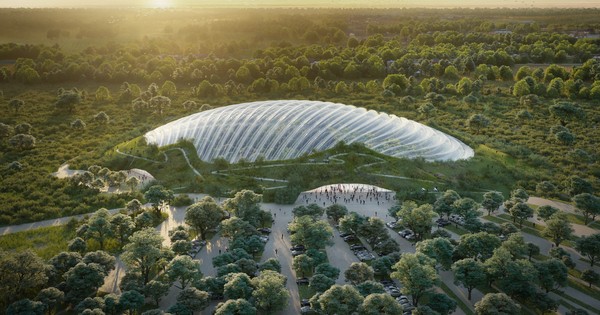
Solar powered dome in France will cover 20,000 square meters featuring a tropical forest, turtle beach, a pool for Amazonian fish, and a one-kilometer-long walking trail.

A judge in California, US sided with the nonprofit that brought the case against coffee companies because of a carcinogen, acrylamide, that is produced when coffee beans are roasted.


