

Estimated to be magnitude 5, the quake is the biggest ever detected on another planet. This adds to the catalog of more than 1,313 quakes InSight has detected since landing on Mars in 2018.

According to new evidence obtained by the orbiter element of the joint European-Russian ExoMars mission, there is plenty of water ice at the bottom of Valles Marineris mixed with Martian soil - regolith.

The results from Mars simulations, Project Sirius and project Mars-500, showed worrisome outcome - the astronauts become detached from mission control and almost autonomous with time.

New findings from NASA's Juno probe orbiting Jupiter provide a fuller picture of how the planet's distinctive and colorful atmospheric features offer clues about the unseen processes below its clouds.
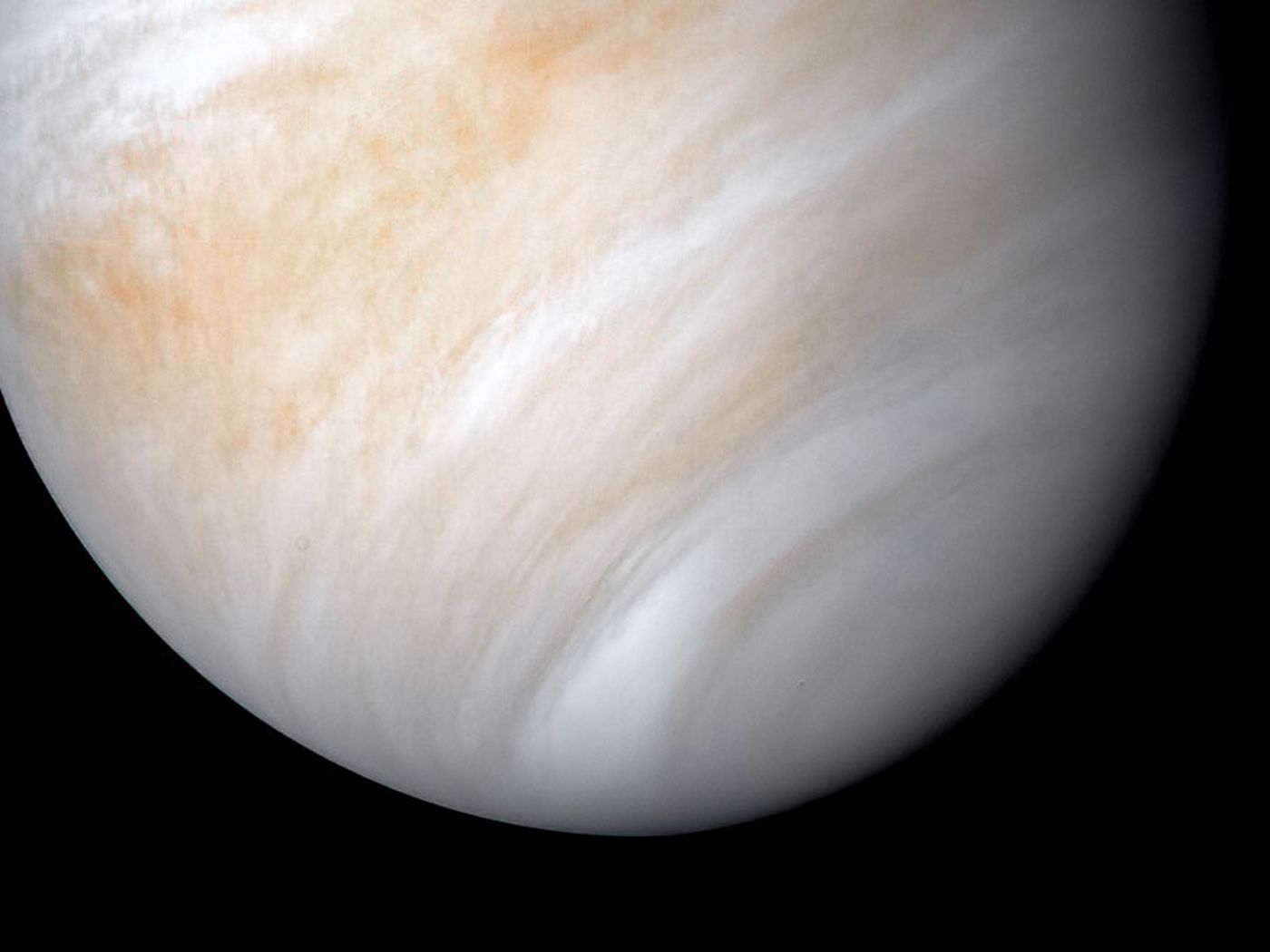
New research suggests that water never condensed and that, consequently, oceans never formed on the surface of Venus. One of the main reasons for this is the clouds that form preferentially on the night side of the planet.

The most powerful previously detected quakes occurred in the Cerberus Fossae region on Mars, where lava may have flowed in the geologically recent past.

Scientists have long noticed an absence of ammonia in the atmospheres of Uranus and Neptune. Scientists now think that ammonia in the upper atmosphere formed “mushballs” by merging with water.

The first research paper from Perseverance rover team was published lately. It shows that Jezero Crater on Mars was probably the site of some violent floods.

Other rovers have also experience dust devils, but Jezero crater, Perseverance’s landing site, seems to have a high occurrence of dust devils.

The impact on Jupiter was reported by both amateur and professional astronomers. The object’s diameter is estimated at 20 meters and it is believed to be the remnant of a larger comet or asteroid.

Ripples in Saturn’s innermost rings indicate the planet’s core is not a compact, solid structure as some have theorized but more like a thick “soup” of ice, rock and metallic fluids extending across 60 % of the planet’s diameter.

Some scientists think the best place to find evidence of life is one of Mars’ moons. They might serve as a depository for material that was blasted off of Mars’ surface in the past.

he InSight team has found that the Martian crust is thinner then expected (20 to 37 km) and its core is liquid with radius of about 1830 km.

When light shines on biological matter, part of the wavelength of the light that is reflected back is curled in either a clockwise or counterclockwise spiral. Astrobiologists used this phenomena in their remote sensing technique.

Monday, NASA's Ingenuity Mars Helicopter became the first aircraft in history to make a powered, controlled flight on another planet. The flight was a success.


