
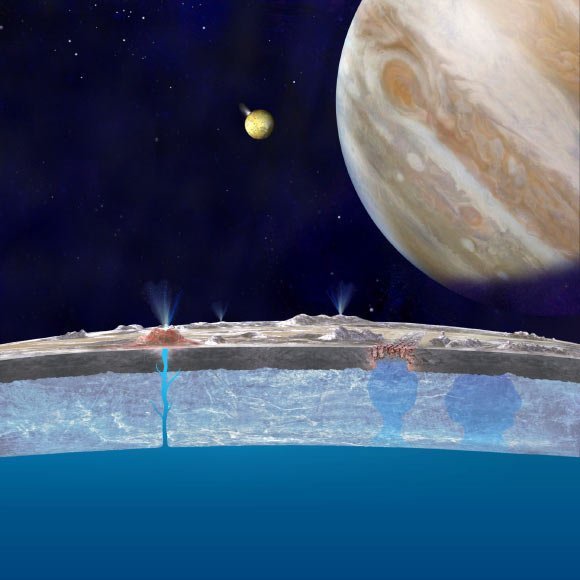
A new research suggests reaching Europa's subsurface ocean — or even glimpsing evidence of it near the icy surface — may be far harder than expected.
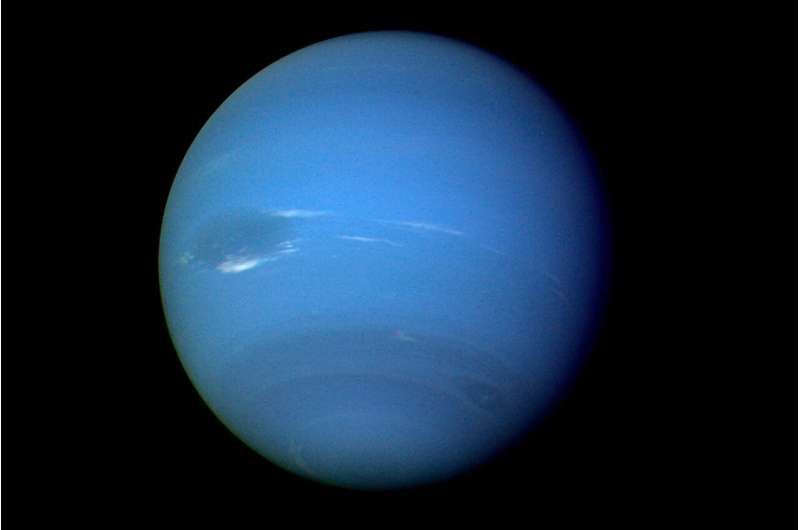
Observations suggest that Nereid is no party crasher like Triton and likely survived by escaping into its extreme, elliptical orbit around Neptune.
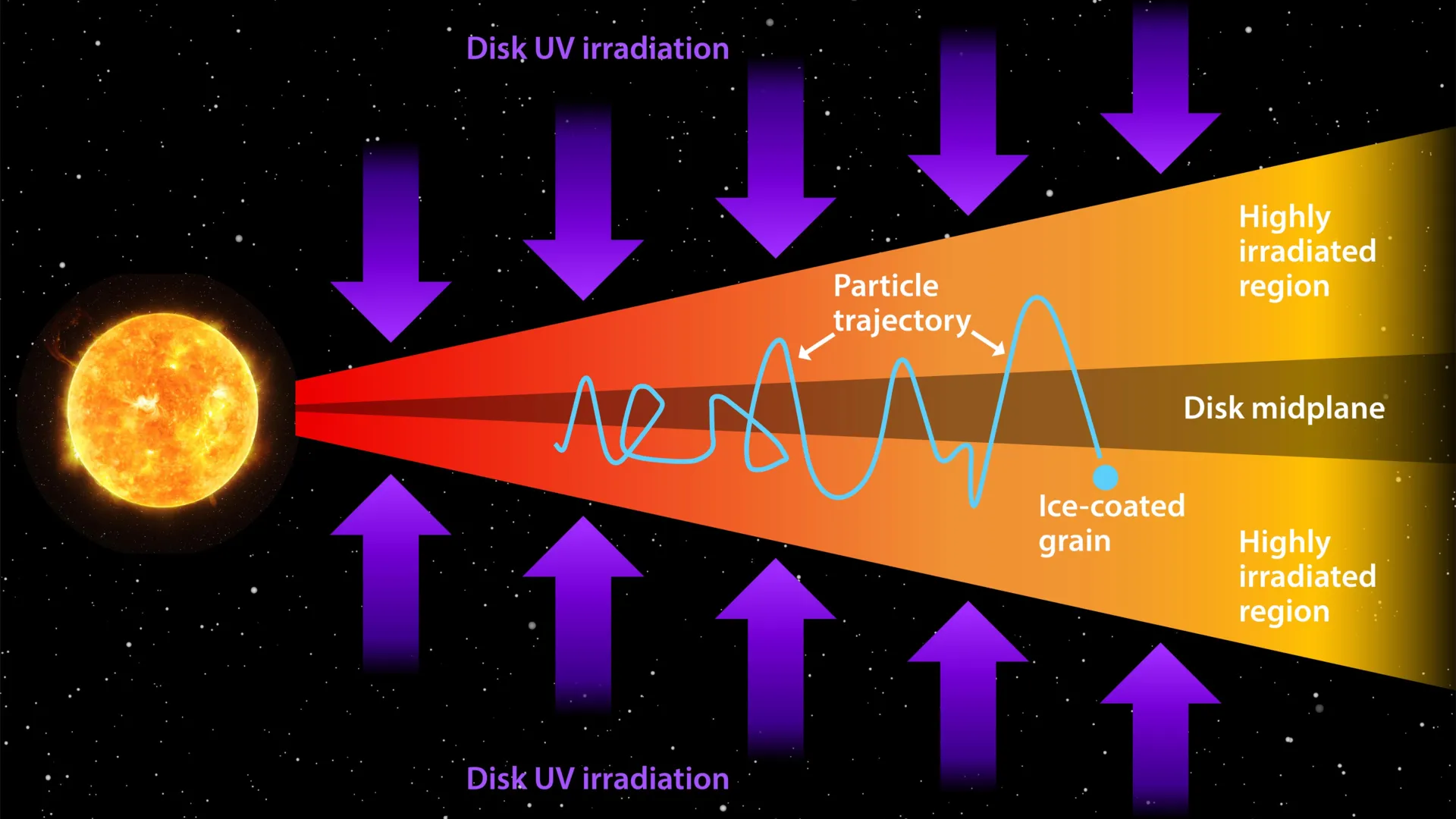
Jupiter’s icy moons may have been seeded with the chemical ingredients for life from the very beginning.
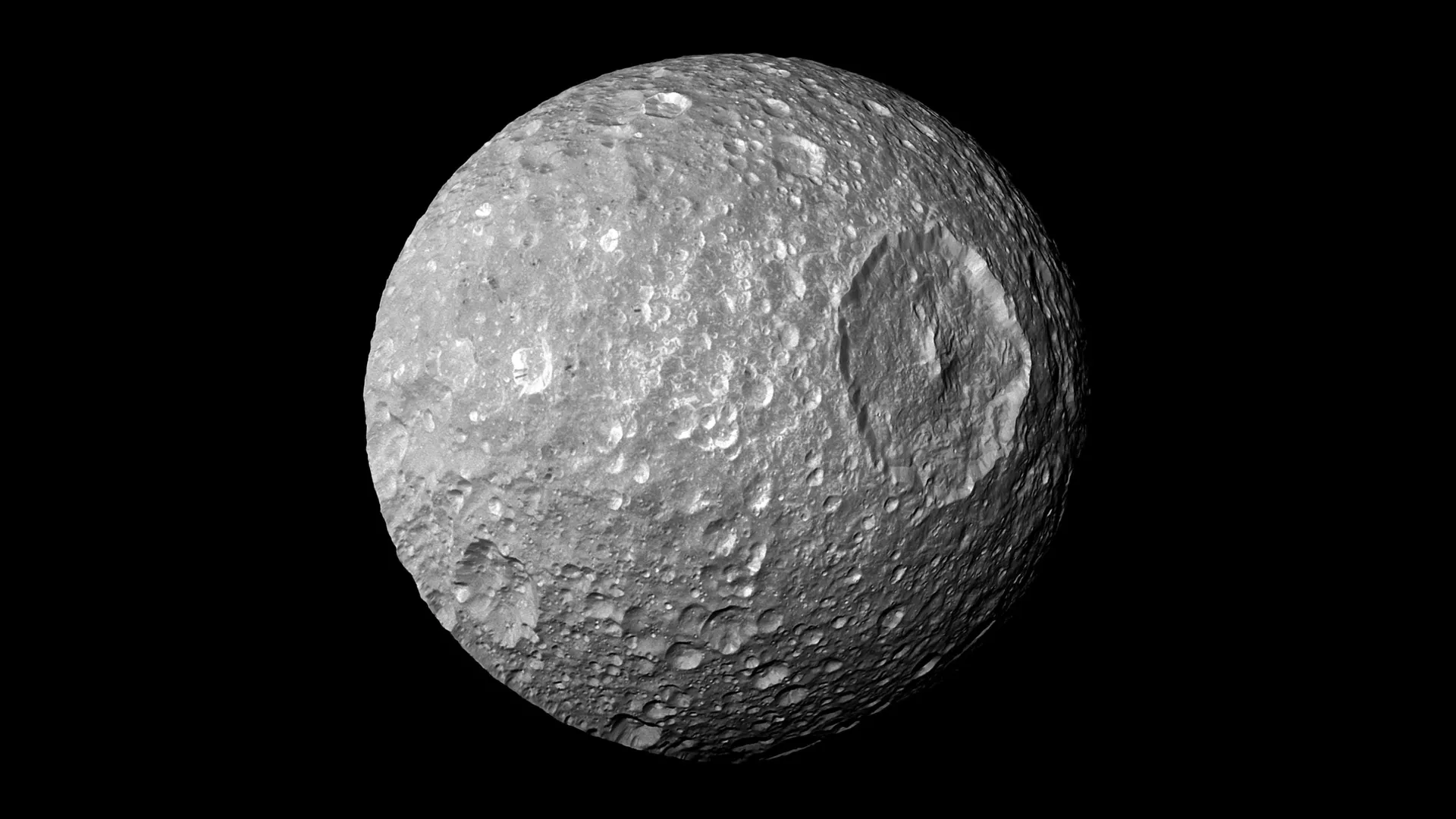
Icy moons circling the outer planets may be far more dynamic. New research suggests that when heat from tidal forces melts their ice shells from below, the sudden drop in pressure could cause hidden oceans to boil beneath the surface.
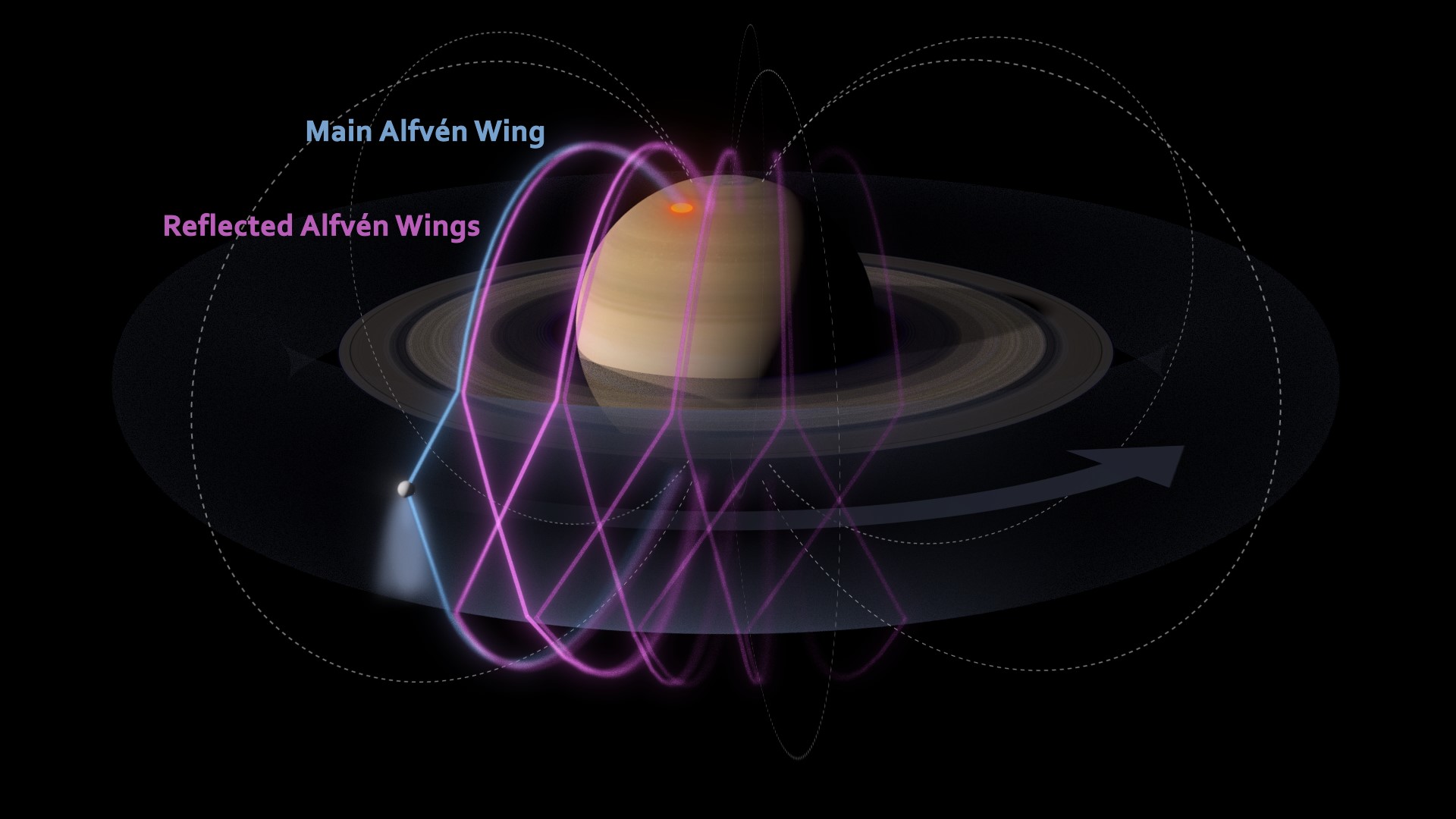
The analysis of data from four instruments aboard Cassini, collected over the mission’s 13-year duration, demonstrates the crucial role that Enceladus plays in circulating energy and momentum around Saturn’s space environment.
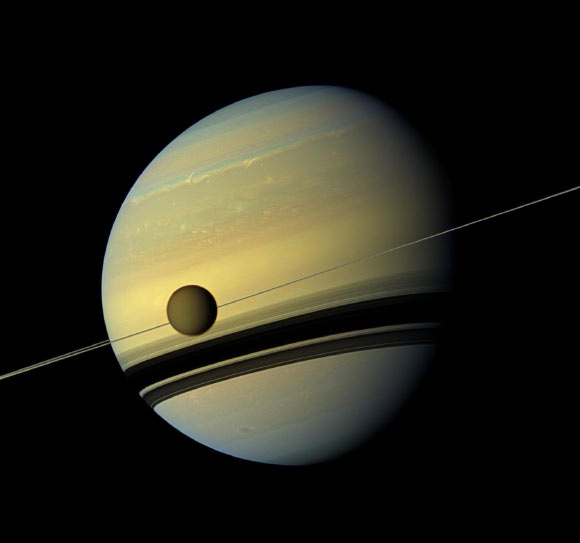
Scientists argue that two Saturnian moons, Titan and Hyperion, are not primordial worlds, but the result of a dramatic merger between two ancient moons.
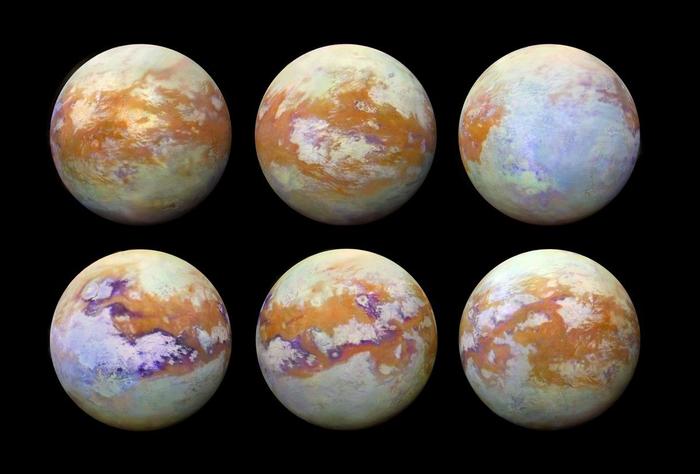
Careful reanalysis of data from more than a decade ago indicates that Saturn’s biggest moon, Titan, does not have a vast ocean beneath its icy surface, as suggested previously.
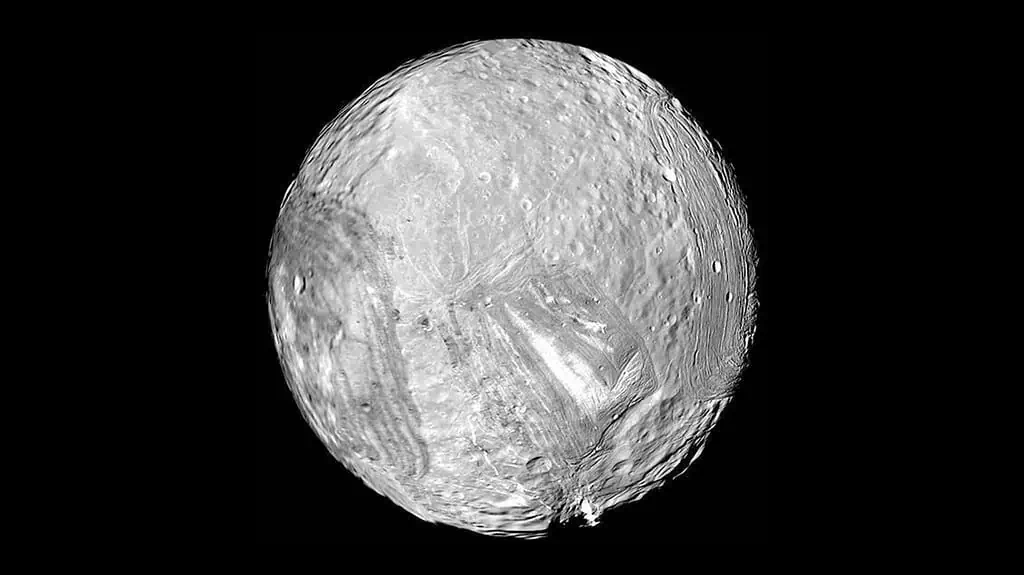
There are several frozen moons in our solar system, orbiting the gas giants. Some of them have liquid water under the surface and deep down in the dark, the ocean may be boiling.
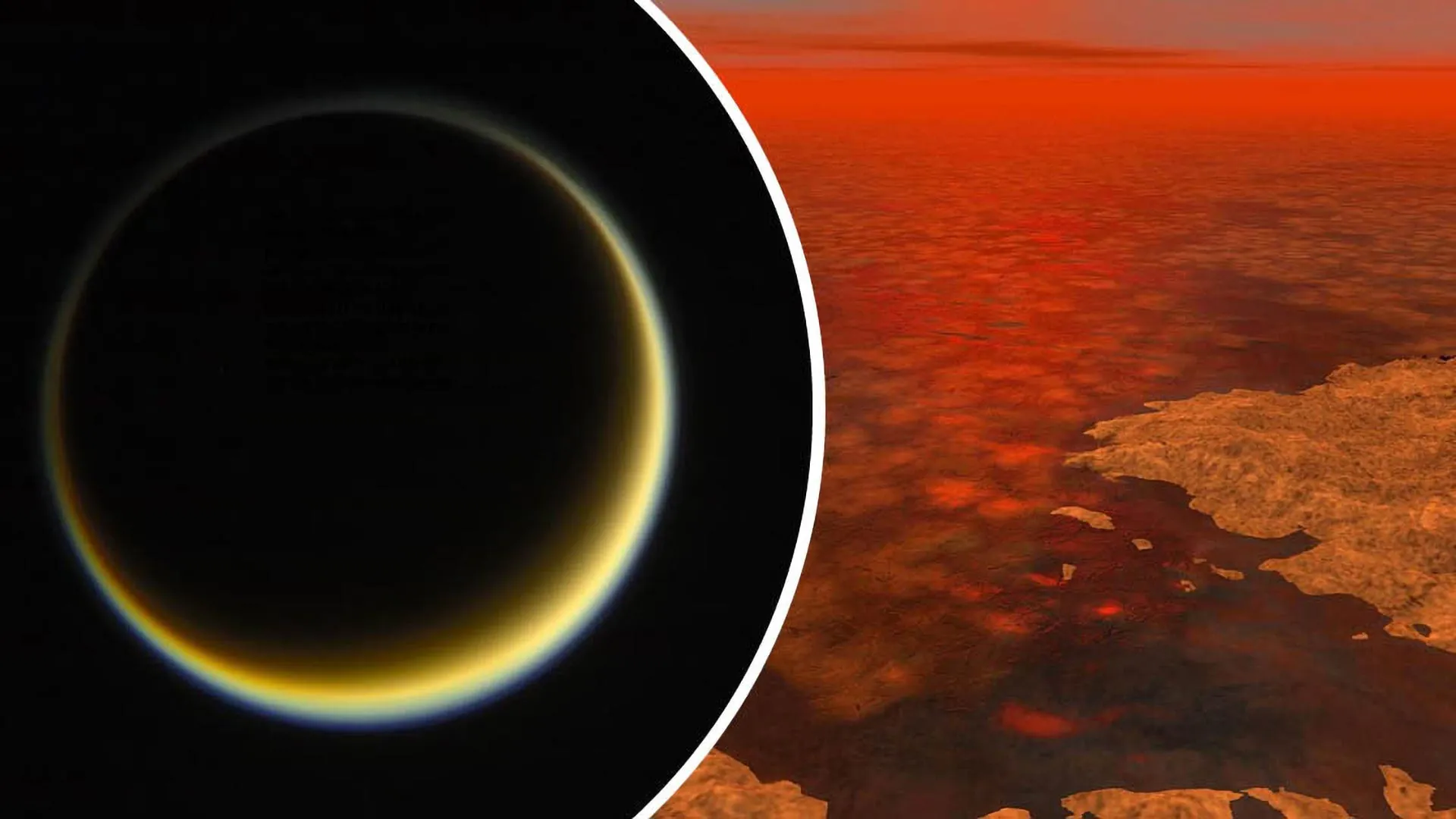
Scientists from NASA and Chalmers University have discovered that incompatible substances can mix on Titan’s icy surface, breaking the “like dissolves like” rule of chemistry.
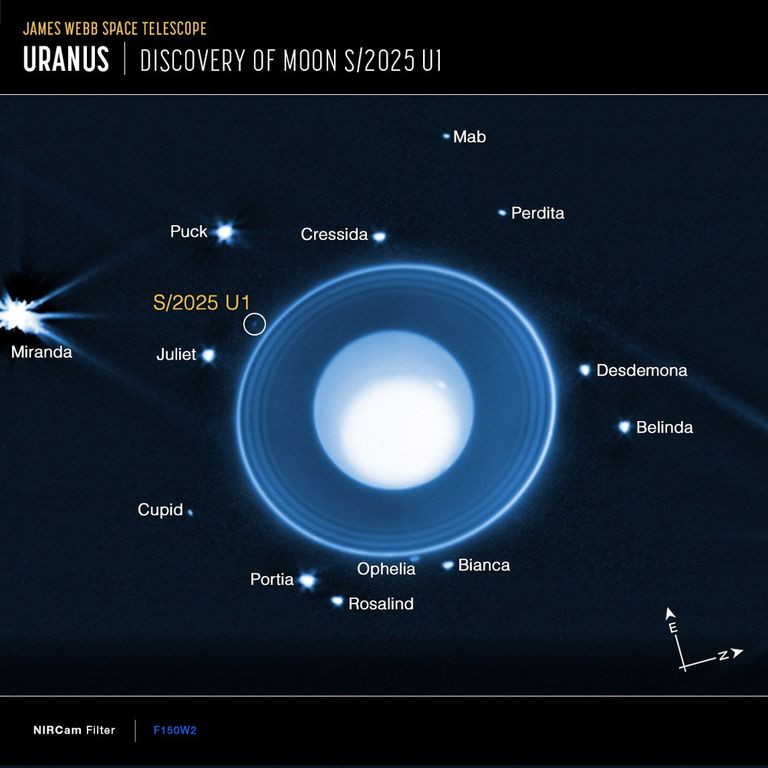
Using NASA’s James Webb Space Telescope, a team has identified a previously unknown moon orbiting Uranus, expanding the planet’s known satellite family to 29.
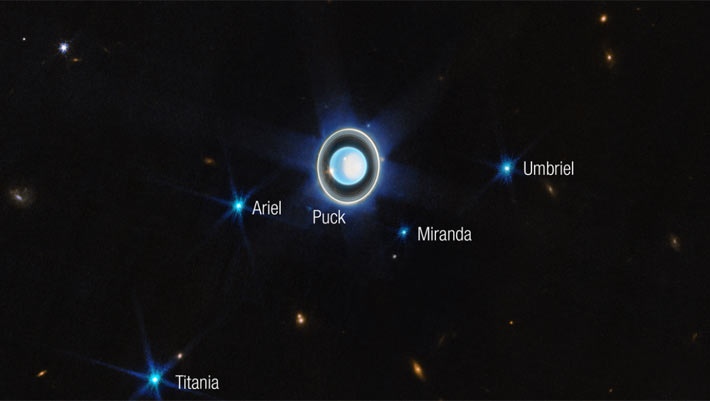
In new research, astronomers using the NASA/ESA Hubble Space Telescope searched for signs of interactions between the magnetic environment and the surfaces of Uranus and its four largest moons: Ariel, Umbriel, Titania, and Oberon.
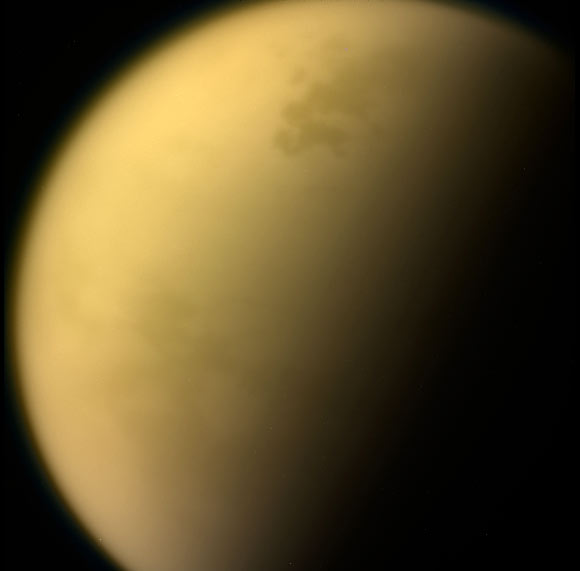
Titan is the only moon in the Solar System with a significant atmosphere, and one that has long captivated planetary scientists.
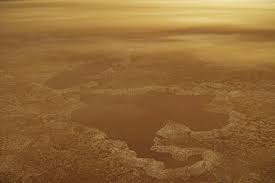
New research finds that despite large rivers and seas of liquid methane, Saturn's moon Titan seems mostly devoid of river deltas.

ESA's Hera mission for planetary defence made the first use of its payload for scientific purposes beyond Earth and the Moon. Activating a trio of instruments, Hera imaged the surface of the red planet as well as the face of Deimos.

A team of astronomers from Taiwan, Canada, the United States, and France has observed 128 additional moons orbiting the gas giant Saturn, bringing its total number of confirmed moons to 274.


