

Philosophy, like any human activity, is influenced by the circumstances in which it takes place. Technological, scientific, economic, political, cultural, social, etc., factors influence how philosophy is conducted and at least some of which questions philosophers take up.

France will install solar panels on 1,000 kilometers of road over the next five years to bring renewable energy to millions of people.

When you compress most materials, you squash their atoms or molecules up against each other, shortening the bonds between them. But a new kind ultra-compressible material acts like a set of gears and springs that shrink in size.

Companies partaking in the RE100 campaign are, on average, halfway towards meeting their 100% renewable electricity goals. This, according to the new RE100 annual report published by The Climate Group and CDP this week, which publishes the latest available data (which is from 2014) on 45 companies partaking in the RE100 campaign to commit to 100% renewable electricity.

A Webster company could soon receive NASA's blessing to build an airlock for the International Space Station that would launch small satellites and test experiments outside the station, while potentially providing an avenue for retrieving and repairing broken equipment.

New Hubble telescope observations suggest that a high-velocity gas cloud was launched from the outer regions of our own galaxy around 70 million years ago. Now, the cloud is on a return collision course and is expected to plow into the Milky Way's disk in about 30 million years.

Adults have learned a variety of ways to put together a special space in their homes that is expressly used for that purpose. They have open to them the money and ability to purchase what they wish to put on their sacred personal space. But what about the children?

Swiss researchers from the Ecole Polytechnique Federale de Lausanne (EFPL) are claiming they have created a ground-breaking new way of charging an electric vehicle that takes only a fraction of the amount of time to fully charge a car, compared to traditional methods.

Virgin Media has unveiled its latest multi-million pound campaign to promote Vivid - a brand that encompasses all of its ultrafast broadcast speeds and service of 100Mbps and above.

How you look at a robot and how it looks at you can make you more comfortable

In the 1960s, NASA sent a rejection letter to a hopeful astronaut simply because she was female. At the time, there was no impetus to set up a training program for women. How times have changed: The latest class of NASA astronauts is comprised of 50 percent women for the first time in history, as reported by The New York Times.

Curiosity is busy poking and prodding the Bagnold Dunes, learning some new tricks in the first-ever interplanetary fieldwork on a sand dune. And of course it looks absolutely stunning while doing it in this latest sand dune selfie.
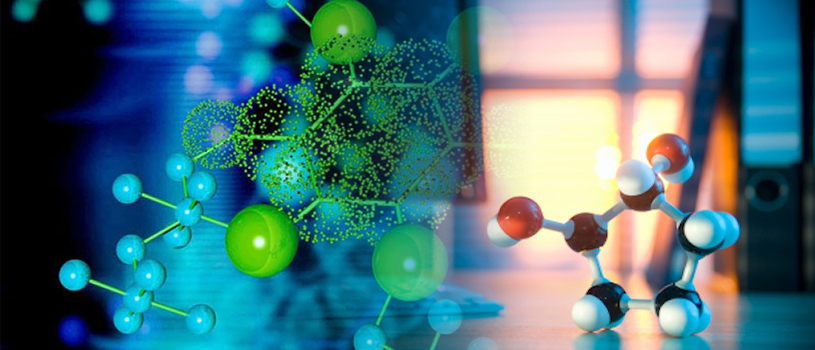
Imagine a polymer with removable parts that can deliver something to the environment and then be chemically regenerated to function again. Or a polymer that can contract and expand the way muscles do.
The United States could reduce greenhouse gas emissions by almost 80 percent from 1990 levels, and do so as soon as 2030, without significantly increasing energy prices, claims a new study by researchers from NOAA and the University of Colorado.
It's impressive to see how thin some laptops have become these days, but that's nothing compared to the ultra-thin machines of the future – which may be closer to reality thanks to a new chip production breakthrough from MIT.


