

The drug could protect bees from American foulbrood, a bacteria that can devastate entire colonies.
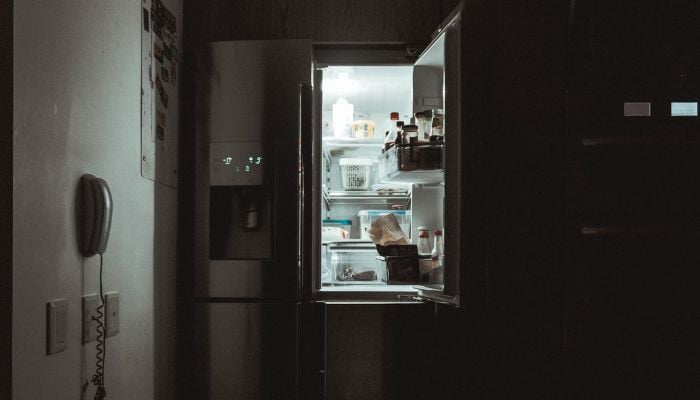
A novel technique created by US scientists makes use of the way energy is stored or released when a material changes phase. It is called ionocaloric cooling and it may eventually replace current techniques.

NASA officials said the icy visitor was first spotted in March 2022 while it was inside the orbit of Jupiter. The icy celestial body - called C/2022 E3 (ZTF), is making its closest approach to Earth on 2 February.

A Japanese scientist has shown that large gamma-ray-emitting bubbles around the center of the Milky Way were produced by fast, outward-blowing winds and an associated "reverse shock."

Researchers from the University of Copenhagen and University of Rochester have identified a layer of tissue that helps protect our gray and white matter, one that hasn't been distinguished before.

A new analysis of dust retrieved from the Moon suggests that water bound up in the lunar surface could originate with the Sun.

How life emerged on Earth from an assortment of non-living molecules is a stubbornly enduring mystery but now we could have some more clues thanks to a recent study.

208 patients completed the course of treatment prescribed by the researchers. The mindfulness program involved 2,5 hour classes once a week. The results show that mindfulness exercises can be as effective as antidepressant drugs.

The company takes in batteries (from cars, laptops, phones, tablets, and other electronics) that are at the end of their useful life, then breaks them down and extracts metals like nickel, copper, cobalt, and lithium.

A startup called CarbiCrete has been developing one promising solution: carbon-negative concrete.If a typical plant adopts its technology - 20,000 tons of CO2 abated and 4,400 cubic meters of water saved.

A recent study finds that the vast subsurface fracture networks in Gale crater would have provided water-rich and radiation-shielded conditions that were potentially more habitable than those on the surface.

In giant clusters of hundreds or thousands of galaxies, innumerable stars wander among the galaxies like lost souls, emitting a ghostly haze of light. These stars are not gravitationally tied to any one galaxy in a cluster.

Two exoplanets – Kepler-138 c and Kepler-138 d – appear to have oceans at least 1,600 km deep. That’s about 500 times deeper than the average depth of Earth’s oceans. However, they could be much warmer and under very high pressure.

Playing through the greenery and litter of a mini forest's undergrowth for just one month may be enough to change a child's immune system, according to an experiment in Finland.

NASA's Artemis 1 mission has returned to Earth following a successful trip around the moon. NASA will begin assessing all the data that the spacecraft collected on its 1.4 million-mile journey through space and begin preparing for Artemis II.


