
What if there was an electric car that not only helped preserve the environment — it actually made us look forward to the daily commute? What if such a car could redefine our relationship with the automobile itself?

To meet climate goals, urban transportation must change.

This was a golden year for planetary exploration thanks to all of the NASA and European Space Agency missions that were planned and implemented decades ago. Not since Apollo and the epic space race of the Cold War has space featured so heavily in the public eye.
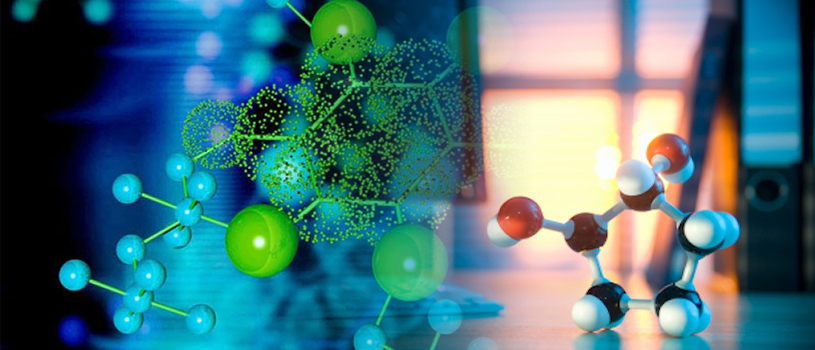
A team of UCLA led scientists have conjured a new magnesium based metal with the help of nanoparticles and it just might find application in a variety of industries ranging from aeronautics and space to automotive and biomedical.
The country of Iceland is becoming a little greener. The nation prides itself on having 100 percent renewable energy, but now scientists are ready to tap into another natural resource to create even more clean power.
A conscious couple built a passive solar home near Ottawa, Ontario, Canada. In addition to orienting their house to face south, they installed overhangs that block the sun to keep it cool during summer months and allow the sun to enter and heat the house during winter months.

An international team of scientists have crunched the numbers and discovered something straight out of science-fiction: They claim that the center of our galaxy could host a giant wormhole.
Scientists may have discovered a new particle in nature - or it could be a glitch.

Experts have warned about the havoc robots could cause humanity. How do we ensure machines are friends rather than foes?
The "world's first humanoid robot for the family."

Evolution may be more intelligent than we thought, according to a University of Southampton professor. Professor Richard Watson says new research shows that evolution is able to learn from previous experience.

For the first time ever, scientists have identified clusters of genes in the brain that are believed to be linked to human intelligence.

We are experiencing a new wave of innovation in health care - one that promises to create the smartest, most connected, and most efficient health systems the world has ever seen.

Why send a message back in time, but lock it so that no one can ever read the contents? Because it may be the key to solving currently intractable problems.

IT's sleek, smart, and seriously good for your conscience.


