

How can Asia's cities cities sustain rapidly growing populations without further wreaking havoc on the environment, while still maintaining their competitive edge?
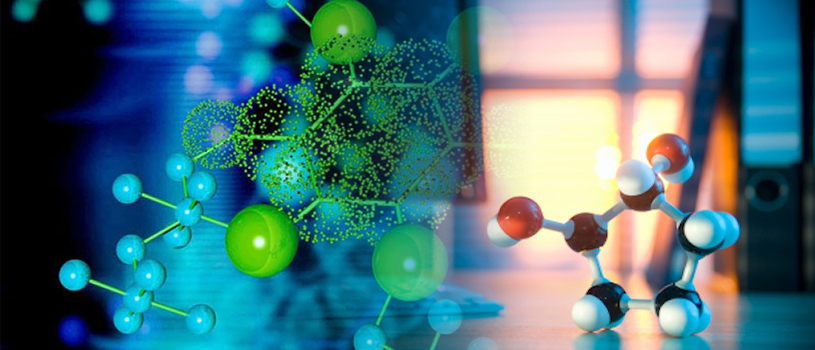
University of Washington scientists have successfully combined two different ultrathin semiconductors — each just one layer of atoms thick and roughly 100,000 times thinner than a human hair — to make a new two-dimensional heterostructure with potential uses in clean energy and optically-active electronics.

Scientists have developed an innovative 3D bioprinter capable of generating replacement tissue that's strong enough to withstand transplantation. To show its power, the scientists printed a jaw bone, muscle, and cartilage structures, as well as a stunningly accurate human ear.

The TED Conference has always had a reputation for being something of an alternate reality, but this year it is virtual worlds themselves that are taking the stage.

Researchers at Johns Hopkins Bloomberg School of Public Health have produced tiny brains made of human neurons and cells. These mini-brains could radically change how drugs are tested, replacing the many animals currently being used for neurological scientific research.

An infant star lights up the nebula IC 2631 in this remarkable new image from the MPG/ESO 2.2-m telescope at ESO's La Silla Observatory, Chile.
How do you build a future out of grass? On the Indonesian island of Bali, one organization has set out to do just that. Ibuku, an architecture and furniture design firm based outside of Denpasar, Bali’s capital, is using Dendrocalamus asper bamboo—or petung in Balinese—to construct Green Village.

A LARGE-scale solar and wind revolution has been sparked in Queensland with 17 proposed projects capable of powering more than a million homes.
A landmark day for Einstein and our understanding of the universe: the detection of gravitational waves. Brian Greene explains the discovery.

Engineers from the University of Rochester have produced a new shape-changing polymer that rapidly responds to body heat. This remarkable new mighty morphing material, which can lift objects up to 1,000 times its own mass, is showcased in the Journal of Polymer Science Part B: Polymer Physics.

It’s easy to look at your smartphone and think you live in the future. But the past’s imagining of the future promised us a lot more robot butlers.
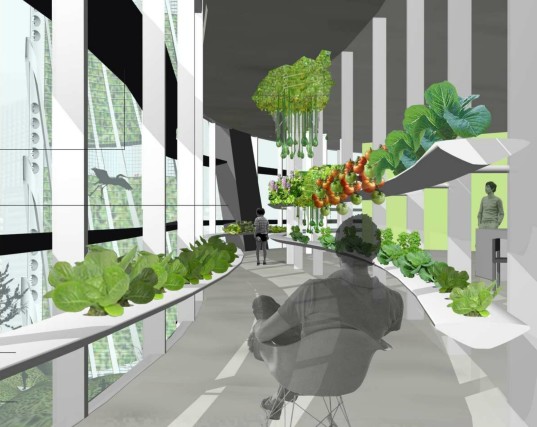
Designed to be a fully sustainable urban living complex, Urban Plant may be a model for green-based urban architecture of the future.

The U.S. National Highway Traffic Safety Administration (NHTSA) has announced that in the government’s eyes, each of Google’s autonomous vehicles will be treated as if they were an ordinary driver.

Google Fiber today said it will provide free Internet access at gigabit speeds to residents in affordable housing. Google Fiber was already providing free Internet in public housing, but speeds were limited to 5Mbps downloads and 1Mbps uploads.


