

NASA's Mars 2020 Perseverance rover mission is on its way to the Red Planet to search for signs of ancient life and collect samples to send back to Earth.
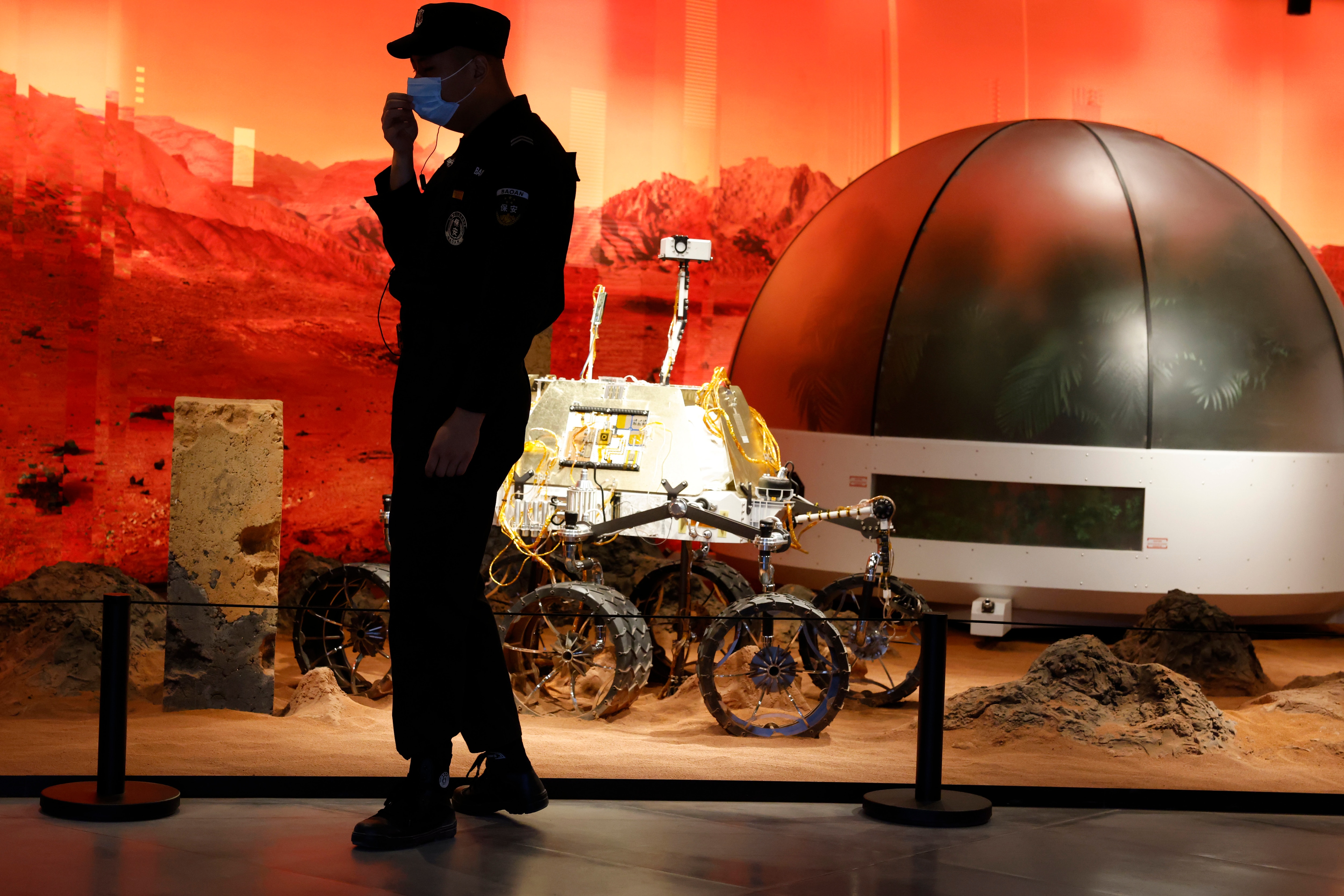
An unmanned spacecraft blasted off Thursday on a yearlong journey to Mars. The Tianwen-1, which translates into “Questions to Heaven,” is expected to reach the Red Planet by February.

The Hope orbiter will arrive in February 2021 to begin a two-year survey of the weather on the red planet. For Emirati scientists the mission represents a new chapter in the history of scientific discovery.

Groups like Mars Habitat are dedicated to conducting simulated missions in analog environments. The lessons learned will not only prepare people to live and work in space but foster ideas for sustainable living here on Earth.

The ringless Mars we see today is probably an anomaly. We’re in between rings right now, and we’ve assumed that’s normal.

After months of perseverance, the team operating the instrument has succeeded in getting the Mole at least some distance into the ground. The Mole's job is to penetrate into the Martian soil, to a depth of 5m.

Projects BIOWYSE and TIME SCALE are being developed in Norway. These two systems are all about providing astronauts with a sustainable and renewable supply of drinking water and plant food.

4 billion year old Nitrogen containing organic molecules has been discovered in Martian meteorites. This finding suggests a wet and organic-rich early Mars, which could have been habitable and favorable for life to start.

The molecules were extracted by the Curiosity rover from a mudstone section of the Gale Crater. Scientists have concluded that we can't rule out those molecules actually have a biological origin.

InSight is the first mission dedicated to looking deep beneath the Martian surface. Findings reveal a planet alive with quakes, dust devils and strange magnetic pulses. However, the lander's mole is still stuck and scientists are working on getting it digging again.
NASA unveiled new spacesuits that astronauts will wear on the moon and Mars. The suits are designed to outperform those used during the Apollo program.

According to an international team of scientists, the lake that was present in Gale Crater over 3 billion years ago underwent a drying episode, potentially linked to the global drying of Mars.

Scientists now propose using an insulating material called silica aerogel to make parts of the Martian surface friendlier to photosynthetic life. Perhaps an aerogel blanket could more easily melt the water on the Martian ice caps to make a small section of the planet habitable.

NASA's Curiosity rover discovered "startlingly high amounts of methane in the Martian air" on Wednesday in what could potentially be a sign of life on the Red Planet, the New York Times reported on Saturday.

Clay often forms in the presence of water – a key ingredient for the evolution of life as it is known on Earth – and Curiosity’s latest findings add more evidence that a significant amount of water once pooled and flowed in Gale Crater on Mars.


