

At the fifth time of asking, SpaceX's latest Falcon 9 rocket finally took off on Friday, March 4. Delays had seen the launch pushed back for almost two weeks, but it successfully launched at 6.35 p.m. EST (11.35 p.m. GMT) on Friday from Cape Canaveral Air Force Station in Florida.

China released its thirteenth five-year plan on Saturday, pledging to cut the carbon intensity of its economy to 18% below current levels by 2020, a target that is likely to guide the CO2 cap in its national emissions trading scheme.

As optical computing becomes a more realistic prospect, lasers will be required to connect components inside our devices. Now, a new silicon-based laser could make it far easier for researchers to replace wires with beams of light.

Individual bacterial cells have short memories. But groups of bacteria can develop a collective memory that can increase their tolerance to stress. This has been demonstrated experimentally for the first time.
Engineers created a flexible, stretchy metamaterial that suppresses radar, effectively cloaking whatever it covers.

Researchers have developed a new way of growing realistic human tissues outside the body.

As you next fly into Heathrow, look out the window and you might see the world's largest floating solar farm, sitting atop the massive Queen Elizabeth II reservoir in Walton-on-Thames.
Historically, the only way to get anything into orbit has been by rocket; a process that is massively expensive, cumbersome, and presents a slew of constraints.

A successful test flight means that after being grounded in Hawaii for seven months, the Solar Impulse 2 is ready to continue its journey around the world.

Our neurons are derived from progenitor cells, which are specialized stem cells that have the ability to divide to give rise to neurons. Today, neuroscientists shed light on the mechanisms that allow progenitors to generate neurons.

Graphene is 1 million times thinner than a human hair, 300 times stronger than steel, and notoriously difficult to manipulate into 3D shapes, until now.
Commander Scott Kelly has just returned from his 340-day mission aboard the ISS. The record breaking mission has seen Kelly and Russian cosmonaut Mikhail Kornienko spend almost a year in space, and scientists hope to gain an insight into what long stays in microgravity do to the body, with views on missions to Mars in the future.
Superconductivity promises to revolutionize our world with efficient transport, cheaper electricity, and even hoverboards. Although it's still a long road to that technology, a crucial theory has just been confirmed that could help.
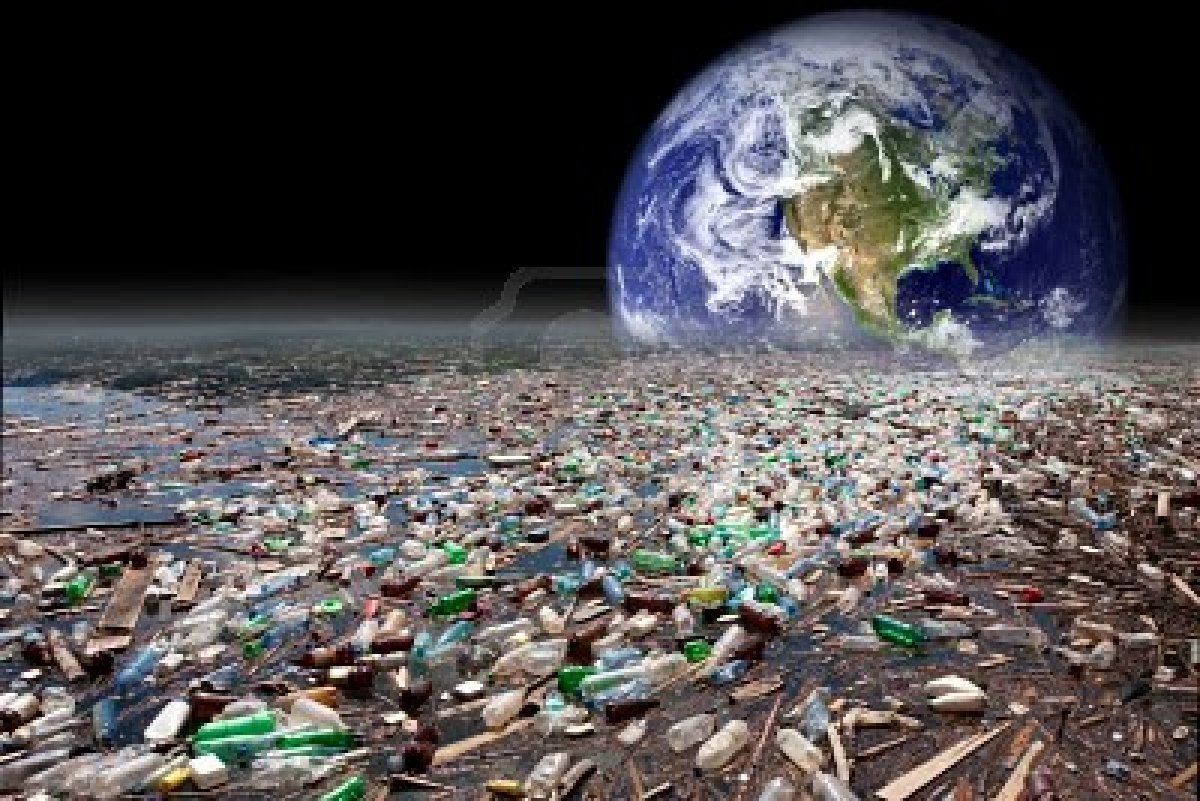
As the effects of climate change really kick in, it won't be the adults alive now who will have to deal with the consequences,it will be their children. Considering the burden that they will have to bear, you might hope that they will be given the full facts about climate change and its causes. But a worrying report has found that many teachers in the U.S. are failing their students.
Machine Creates Beautiful Music with 2000 Marbles and Bells (MUST SEE)


