

A team of University of California, San Diego researchers has built the smallest room-temperature nanolaser to date, as well as an even more startling device: a highly efficient, "thresholdless" laser that funnels all its photons into lasing, without any waste.
CERN, the European Organization for Nuclear Research, has announced that the Large Hadron Collider (LHC) will run with a beam energy of 4 TeV this year, 0.5 TeV higher than in 2010 and 2011.



Nearly 13.7 billion years ago, the universe was made of only hydrogen, helium and traces of lithium — byproducts of the Big Bang. Some 300 million years later, the very first stars emerged, creating additional chemical elements throughout the universe. Since then, giant stellar explosions, or supernovas, have given rise to carbon, oxygen, iron and the rest of the 94 naturally occurring elements of the periodic table.
(PhysOrg.com) -- Physicists in Italy have discovered the first evidence of a rare nucleus that doesn’t exist in nature and lives for just 10-10 seconds before decaying. It’s a type of hypernucleus that, like all nuclei, contains an assortment of neutrons and protons. But unlike ordinary nuclei, hypernuclei also contain at least one hyperon, a particle that consists of three quarks, including at least one strange quark. Hypernuclei are thought to form the core of strange matter that may exist in distant parts of the universe, and could also allow physicists to probe the inside of the nucleus.

(PhysOrg.com) -- Researchers at the Massachusetts Institute of Technology (MIT) and RMIT University have made a breakthrough in energy storage and power generation.

For the first time, researchers have developed crystalline materials that allow an optical fiber to have integrated, high-speed electronic functions. The potential applications of such optical fibers include improved telecommunications and other hybrid optical and electronic technologies, improved laser technology, and more-accurate remote-sensing devices.
Researchers carefully arrange two iron plates so that they become transparent …

A team of Australian physicists has created the world

Clean energy jobs in the EU have now passed the 1 million milestone. According to a new report [PDF] out by the European Commission, The State of Renewable Energies in Europe, 1.14 million p...

The global wind industry installed just over 41,000 MW of wind power in 2011, bringing the world

Humanity uses around 9,089 billion cubic metres of water a year, mostly for agriculture, according to a new study.
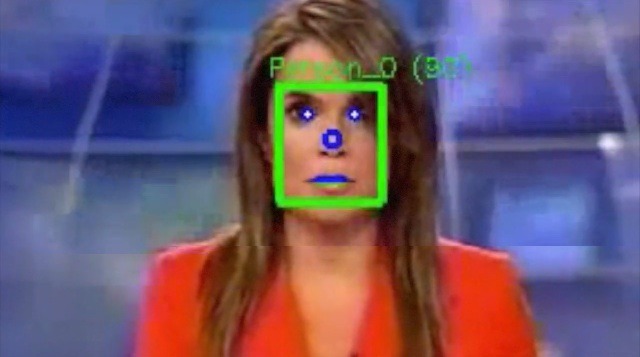
A new video shows off the creepy, emerging world of robot vision.
Panorama - Greenpeace praises Google?s approach to stopping climate change - Renewable Energy Magazine, at the heart of clean energy journalism


