That's galaxies, not stars. After spending a decade measuring the stars, scientists just released a 3D map spanning 1.2 million galaxies.

Canadian researchers have developed what they are claiming is the world's first holographic flexible smartphone, with a bendable display that allows multiple people looking at the device to see different 3D images depending on their perspective.

Holoportation is now a thing, so start slapping everyone in arm's distance to make sure they're real.
Harvard researchers have designed a new type of foldable material that is versatile, tunable and self actuated. It can change size, volume and shape; it can fold flat to withstand the weight of an elephant without breaking, and pop right back up to prepare for the next task.

Historically, the only way to get anything into orbit has been by rocket; a process that is massively expensive, cumbersome, and presents a slew of constraints.

Graphene is 1 million times thinner than a human hair, 300 times stronger than steel, and notoriously difficult to manipulate into 3D shapes, until now.

The TED Conference has always had a reputation for being something of an alternate reality, but this year it is virtual worlds themselves that are taking the stage.

We spend so much time touching our devices — but what if they could touch us back? Apple’s recent leaps with 3D Touch technology show that this could soon be a reality.
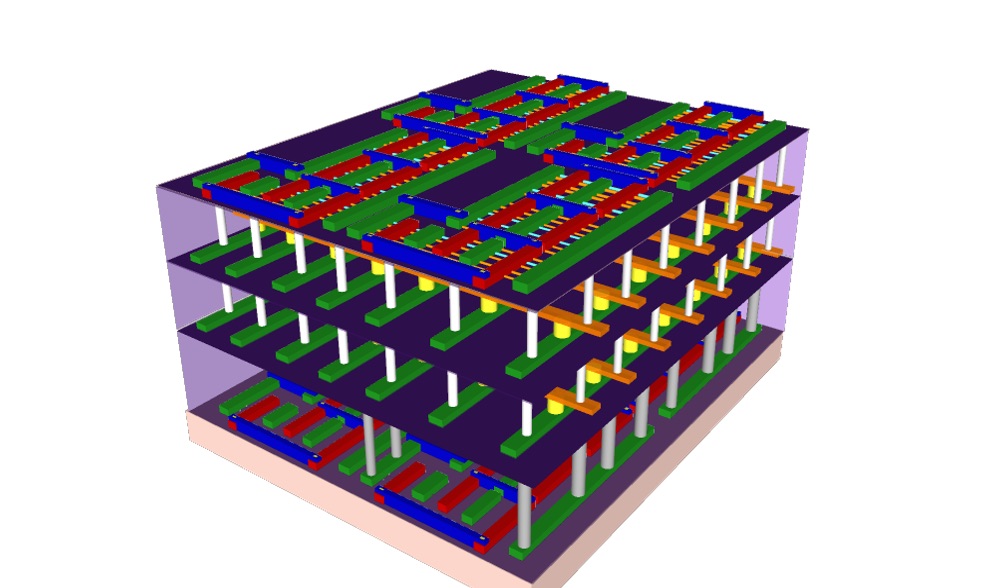
A new computer chip that uses carbon nanotubes and builds connections in 3D could be 1,000 times faster than current technology.

A team at Manchester Royal Infirmary hospital, England, claim to be the first surgeons to use 3D cameras and monitors -- and embarrassingly clunky spectacles -- during an operation. Furthermore, if that wasn

MIT researchers have come up with a solar array which can produce much more energy per square foot than traditional flat panels and potentially more efficiently.

(PhysOrg.com) -- For the first time, scientists have developed a method for generating accurate three-dimensional models of the entire DNA strand of a cell, known as a genome.

3D projection mapping has recently emerged as one of the coolest forms of advertising, with big companies like Nokia, Samsung and BMW projecting beautiful 3D

(PhysOrg.com) -- Any fan of Star Trek knows about the joys of the holodeck. The idea of a 3D, 360-degree immersive digital environment, projected on demand, is an enticing one that has thus far been confined to the silver screen, but technologies are emerging that just may make this possible. In 2008 Physorg reported on a 3D fog display on a room-sized scale, but it could not give a 360 degree experience. New developments in this area may make this possible at some point in the future.