
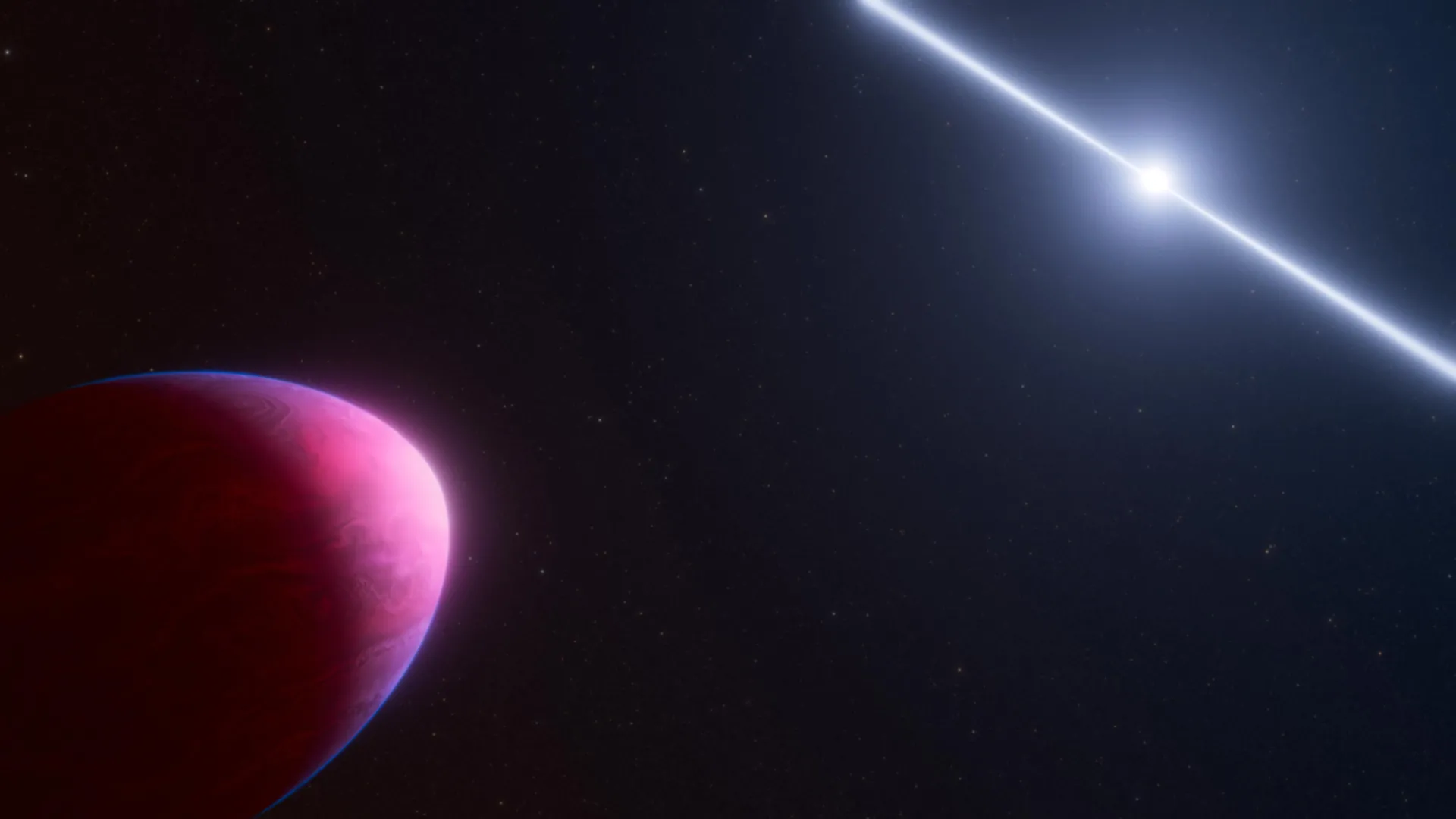
A newly discovered exoplanet is rewriting the rules of what planets can be. Orbiting a city-sized neutron star, this Jupiter-mass world has a bizarre carbon-rich atmosphere filled with soot clouds and possibly diamonds at its core.
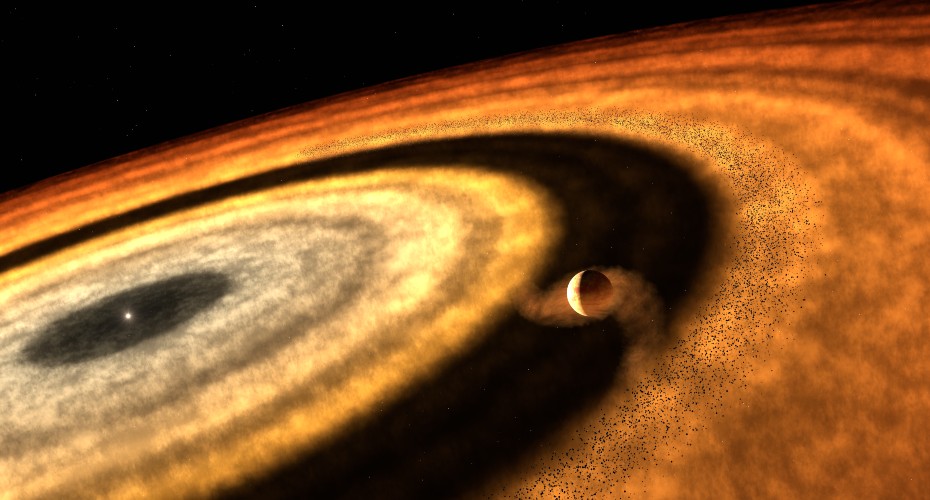
Researchers have used new clues from the James Webb Space Telescope (JWST) to provide a fascinating insight into how the exoplanet WASP-121b formed.
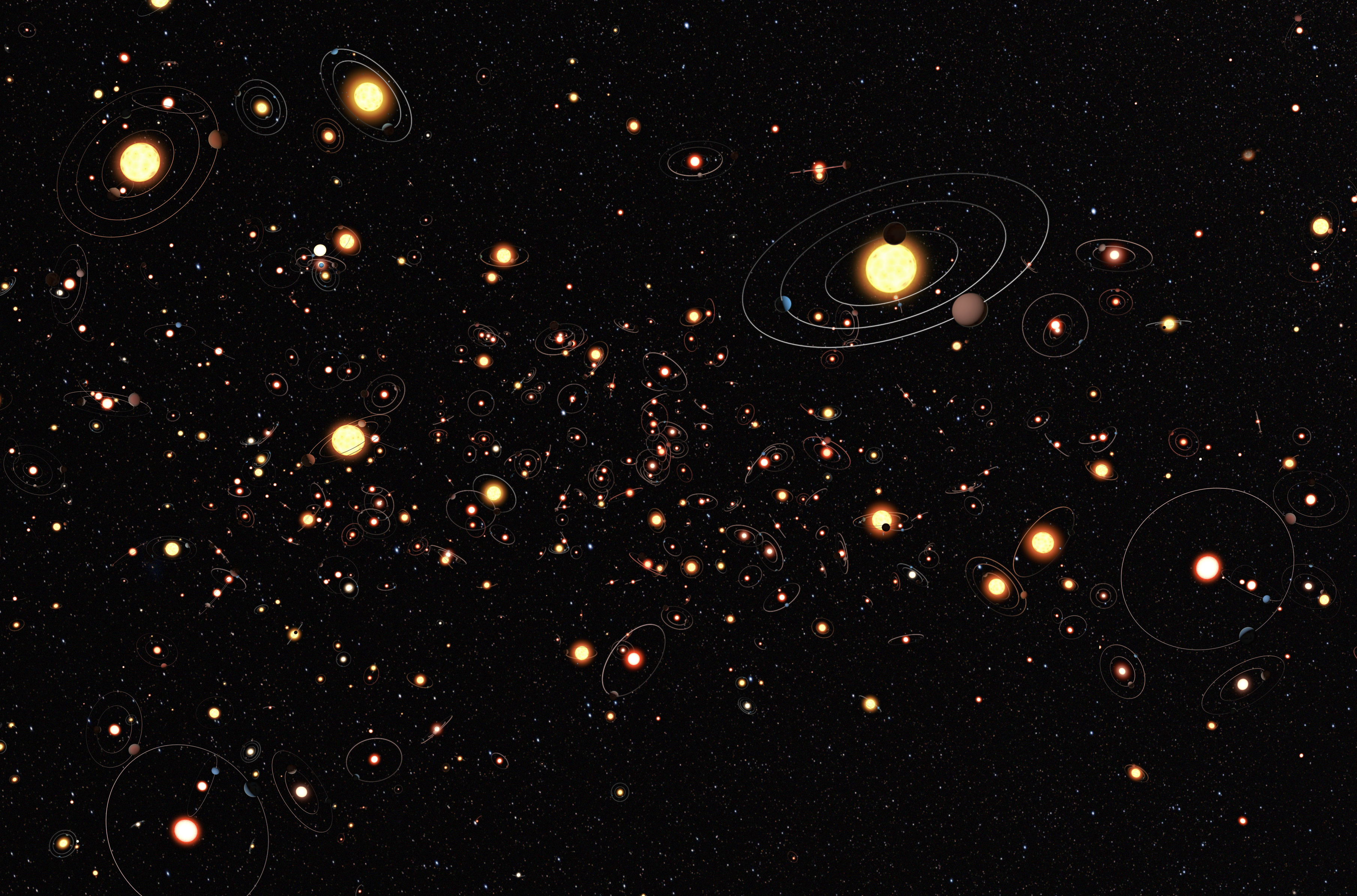
The exoplanet is three times more massive than Jupiter and circles its star in an unusual elliptical orbit, one that would carry it between the Sun’s asteroid belt and the orbit of Neptune if it were transported to Earth’s solar system.


